


Logic Gates Puzzle 100

published: May 4, 2021 — last modified: October 23, 2025

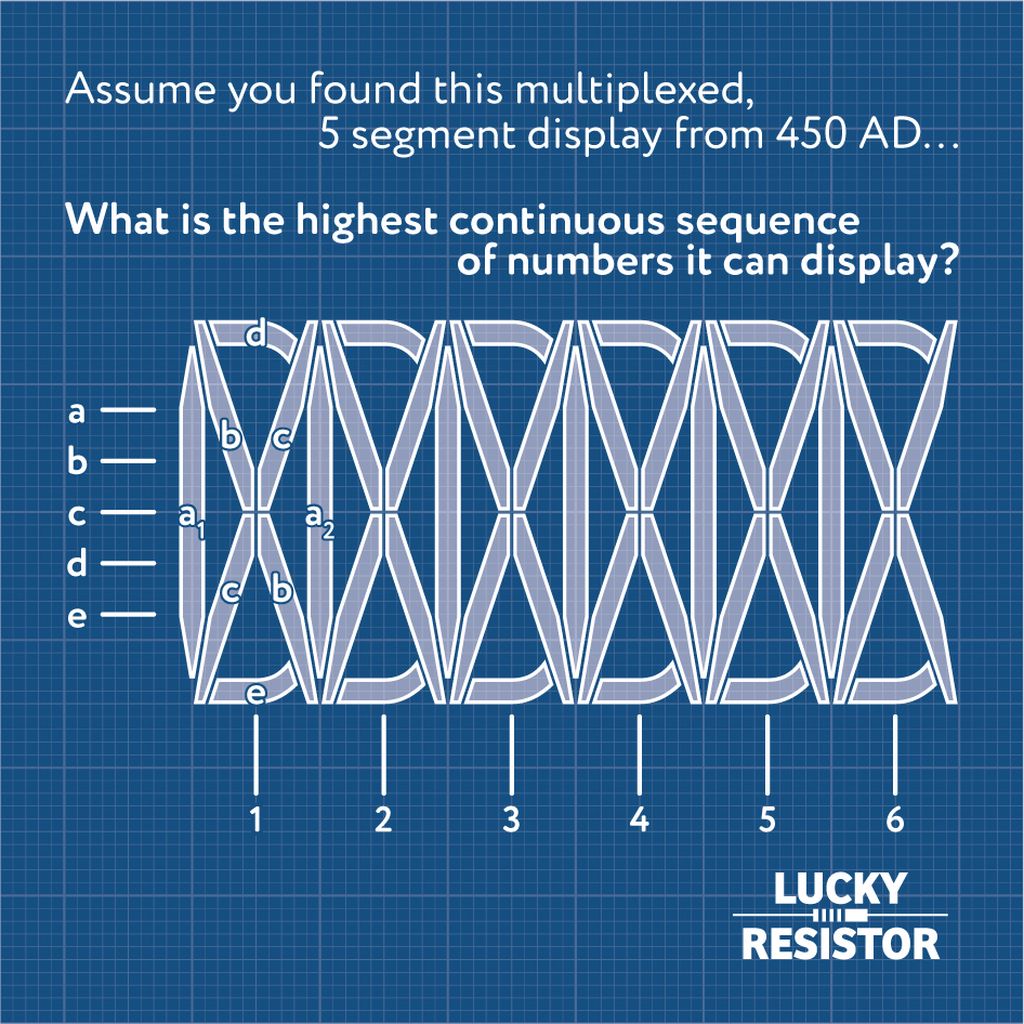
Assume, while digging out an ancient site from 450 AD, you found a mysterious stone with a digital display. Your analysis finds five inputs for five segments (a-e) and six outputs (1-6). It seems to be a classic multiplexed display.

What is this display for?

What is the highest continuous sequence of numbers it can display?

In the Field

You connected the display, and it is still working. Now you can enable and disable the segments.

123456
a
b
c
d
e

Hints

Conclusion

I hope you enjoyed this logic puzzle. Yet, it didn’t contain any logic gates, but who knows how the Romans built it 😉. Let me know if you like to see more puzzles like this.

If you have any questions, missed information, or want to provide feedback, feel free to comment below. 😄

More Puzzles

More Posts

Bit Manipulation using Templates

Posted on 2019-07-23— C++, Improve your Code, Learn

I explore replacing unsafe bit macros with lightweight C++ templates to make embedded bit operations safer and clearer. I show templates for one-bit extraction, set/clear helpers, and compiled firmware size for Arduino Uno. Read the full post to see examples, exercises, and practical benefits.


Read this post

Make your Code Safe and Readable with Flags

Posted on 2018-05-06— C++, Improve your Code

I show how a small C++ flags template makes embedded register bitmasks safer and much easier to read. I'll explain why macros and CMSIS-style definitions lead to errors, and walk through clear C++11 examples and a simple driver. Read on to see the implementation and usage.

Read this post

HAL LCD Demo

Posted on 2019-08-18— Common, Projects

I added a stable Hitachi LCD driver to the HAL layer, using an MCP23008 backend to cut wiring and simplify hardware. This post walks through parts, firmware repositories, and how to run the demo via serial shell. Read the full article for setup steps, code links, and usage tips.

Read this post

Using the TDA 7052 as Amplifier

Posted on 2014-11-08— Projects

I swapped my LM386 for an NXP TDA7052 to reduce distortion and gain more volume. The TDA7052 needs only power, an input and connects to an 8Ω speaker; I added a volume trimmer (I used 47k, 10k also works). Read the full post for the schematic and wiring details.

Read this post

How to Create a Large 3D Printed Artwork

Posted on 2021-12-30— 3D Printing, Build, How and Why, Learn, Projects

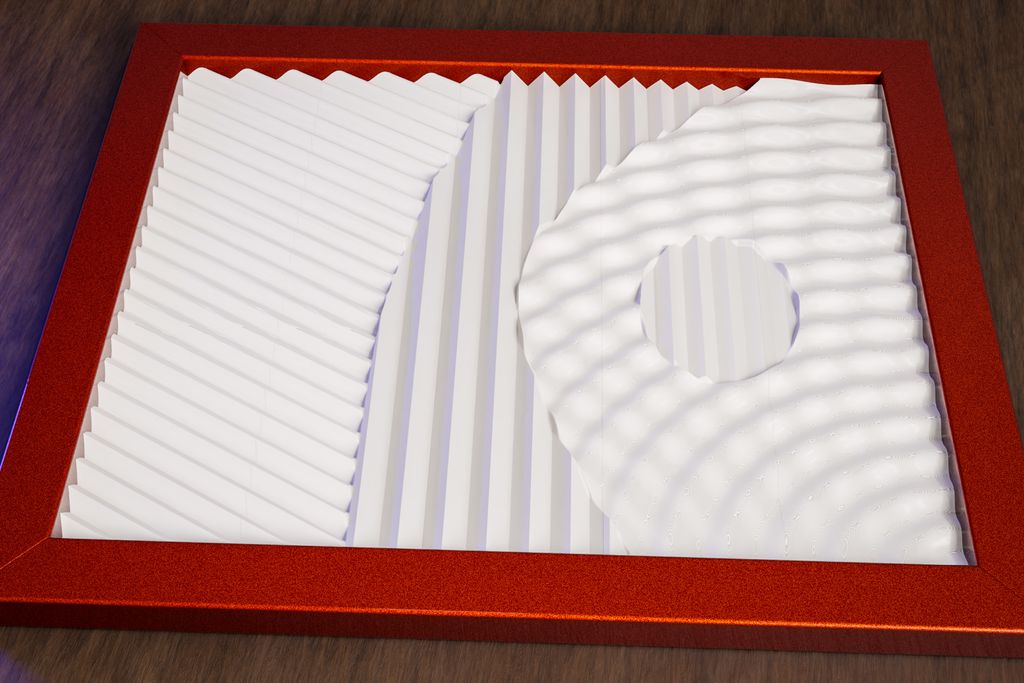
I built a 100×80cm 3D‑printed artwork and walk through the technical steps I used: preparing mathematical height data, generating Z‑maps, slicing into printable tiles with Blender and PrusaSlicer, and assembling and painting the final piece. If you're curious about the scripts and workflow, read the full tutorial.

Read this post

No Success with First Long Term Measurement

Posted on 2017-03-26— Projects

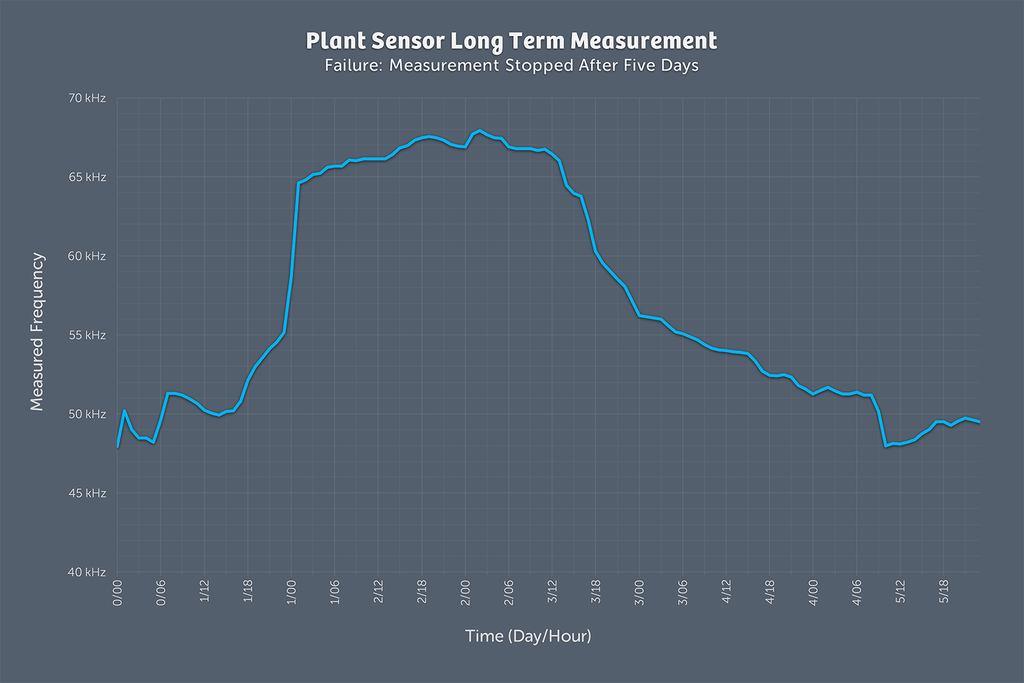
I ran a five-day long test of my plant watering sensor and the results were confusing, so I started a new, more insulated setup using an Adafruit Feather M0, an optocoupler, and pulse-length encoded signals with interrupts. If you’re interested in the hardware and code details, read the full write-up.

Read this post