published: October 29, 2018 —
last modified: October 23, 2025
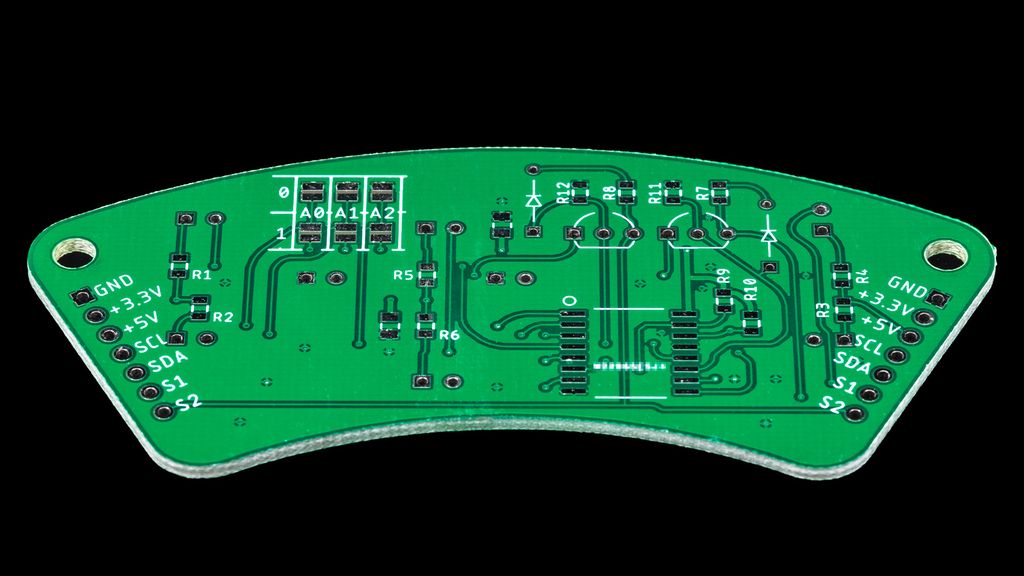
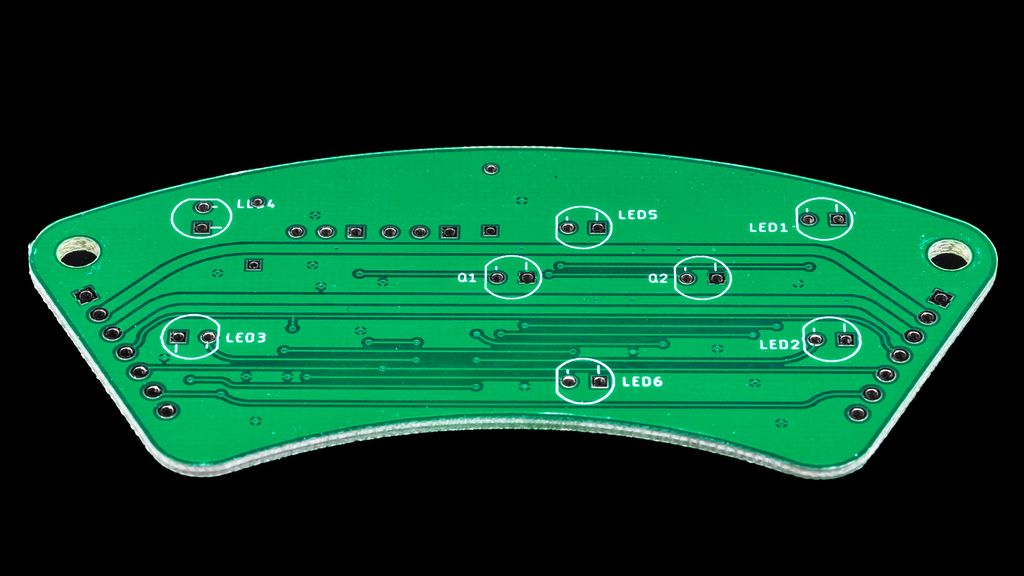
Recently I received boards for a sensor array from PCBWay. This boards were made in a very good quality considering the low price level.
I really like the green solder mask they use, it creates a nice optical effect shifting the green colour towards yellow somehow. The solder mask produces a very nice contrast between the copper and non-copper areas, easy to see all traces.
The small traces on this board have a width of 0.2mm with an insulation of 0.3mm. It is a lead free HAL which is nice and flat.
Production time was two days (over the weekend) and shipping using DHL took four days.
Routing of the boards is nice and smooth, there are no traces of tabs left on the boards.
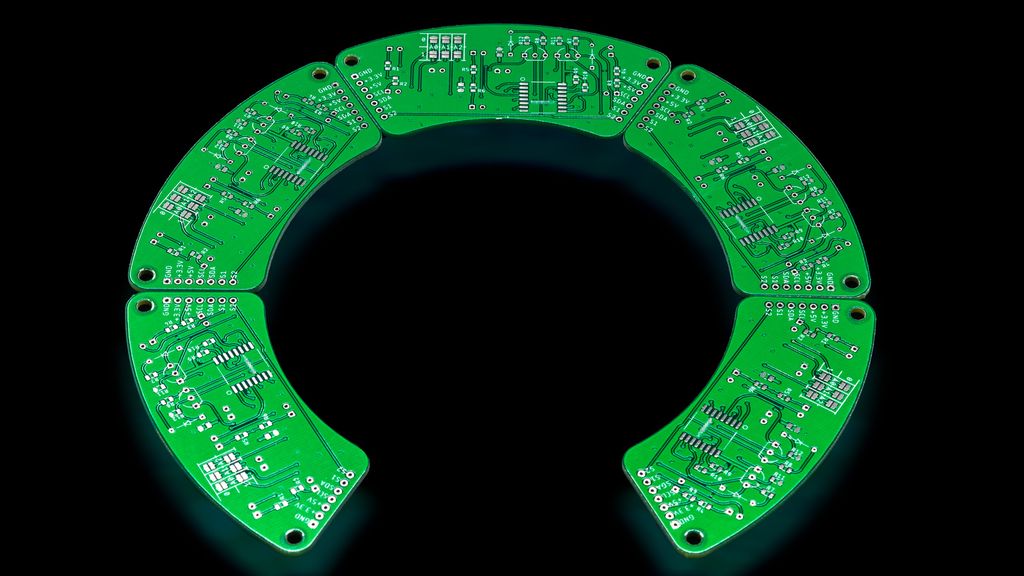
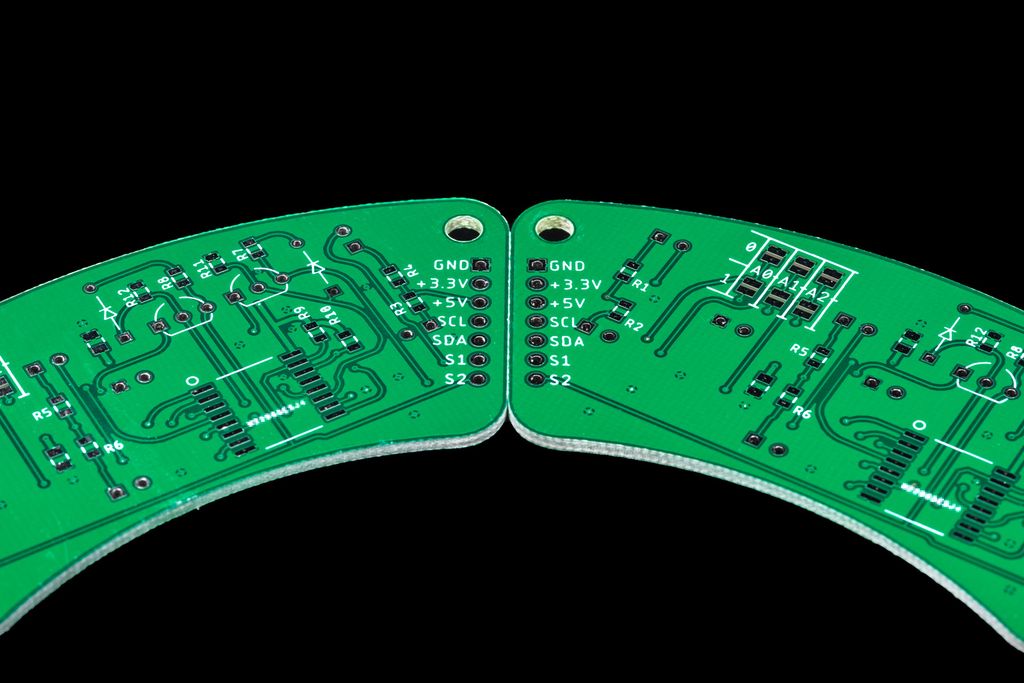
All boards will be connected with a kind of bus in a circle arrangement as shown in the title image and the image below. There is an address selector on each board, to assign each sensor board an unique address.
By splitting the design of the sensor array into five equal boards, I could save a huge amount of production costs. Producing 10 of the shown boards, lead free HAL, with a production time of 2-3 days was just $19.
If you have questions, miss some information or just have any feedback, feel free to add a comment below.
I'm not a 3D‑printing expert, but I show how simple wall profiles — correct XY/Z thickness, chamfers, and internal recesses — make printed boxes stronger and lighter. I share CAD steps, simulations, and common mistakes in plain terms. Read the full post for practical tips to improve your prints.
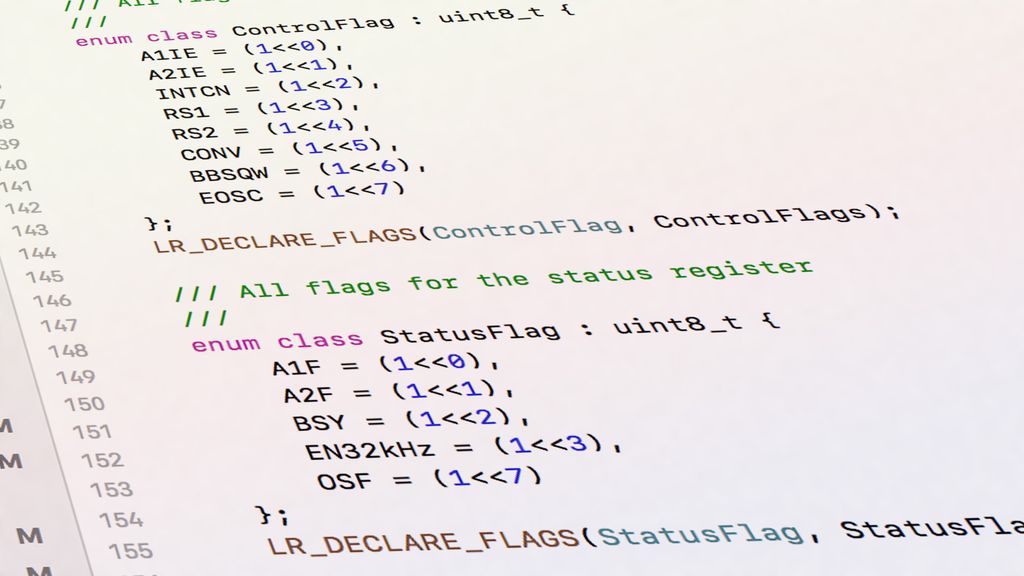
I show how a small C++ flags template makes embedded register bitmasks safer and much easier to read. I'll explain why macros and CMSIS-style definitions lead to errors, and walk through clear C++11 examples and a simple driver. Read on to see the implementation and usage.
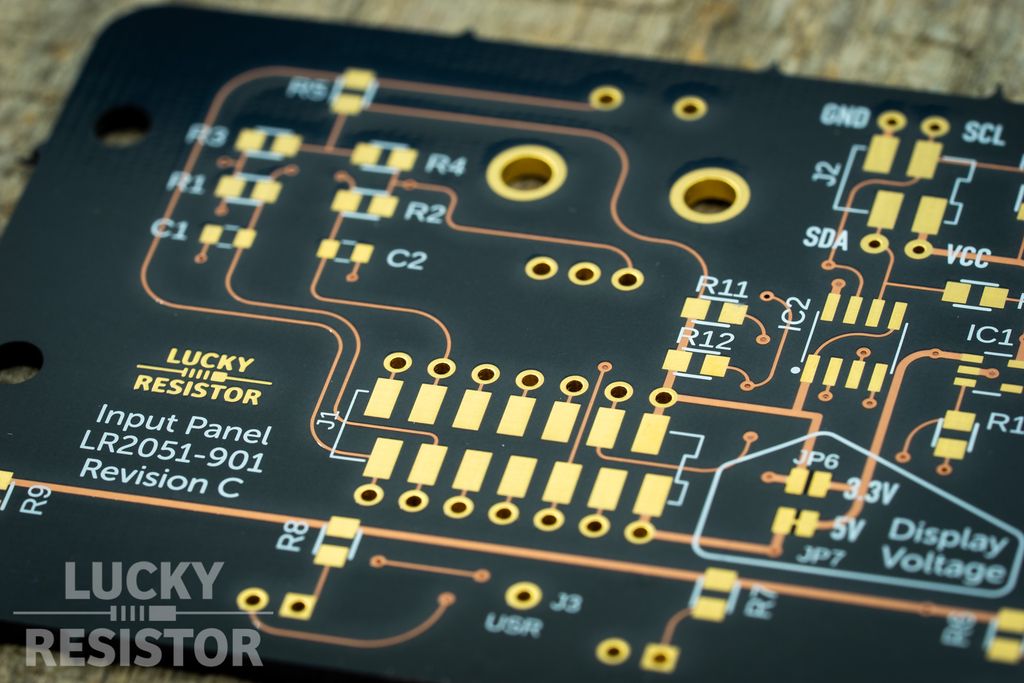
I ordered 'After Dark' PCBs from OSHpark for my pet-feeding device and wanted to share clearer, high-resolution photos so you can appreciate the black substrate with copper and transparent solder mask. If you’re curious about the look or details, please read the full post and leave questions or feedback.
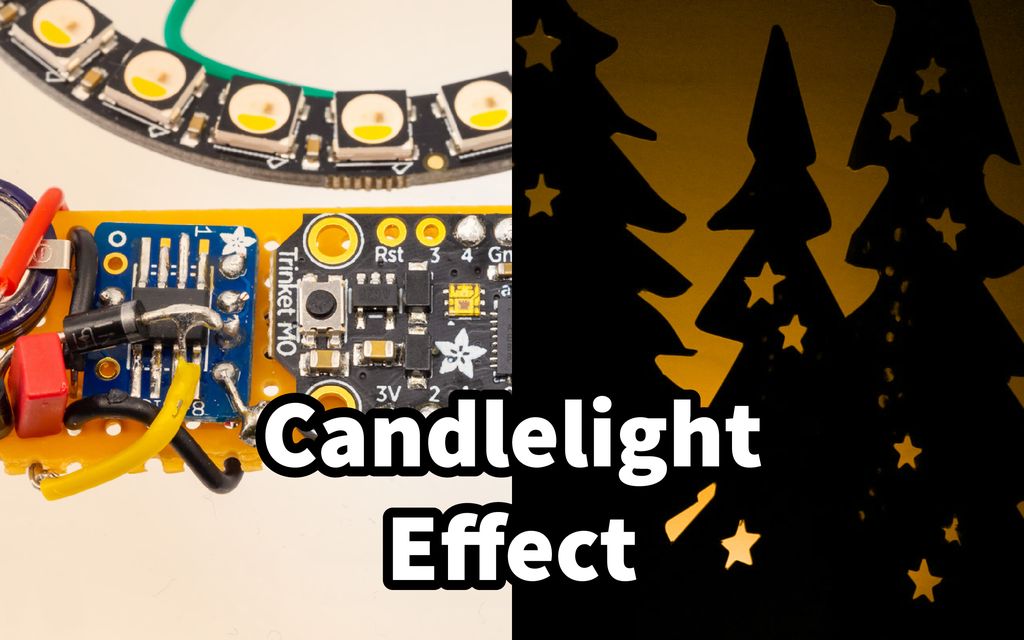
I built a compact Neopixel-based candlelight decoration with a DS3231 RTC and share the schematic, firmware, and build tips here. It's best placed behind a screen or in a jar. Read the full post for parts, assembly photos, and configuration notes to recreate it yourself.
I walk you through using the RP2040's PIO to measure a PC fan's RPM with a small software filter to ignore short spikes and timeouts. I explain the PIO routine and a simple RpmInput wrapper in MicroPython—read on if you'd like the code and practical setup tips.
Posted on 2019-07-12— C++, Improve your Code, Learn
I walk through practical ways I use C++11's auto keyword to reduce repetitive declarations, simplify range-based for loops, lambdas and register access, and make Arduino and embedded code easier to refactor. Read the full post for examples and tips you can apply to your projects.