published: February 23, 2018 —
last modified: October 23, 2025
For a current project I need a step-up converter to get 5 volts from 2.5V-5.5V input. The output of this converter is used to power sensors which drive motors and small heat elements from this source. The average consumed current is 160mA with a peek at 320mA.
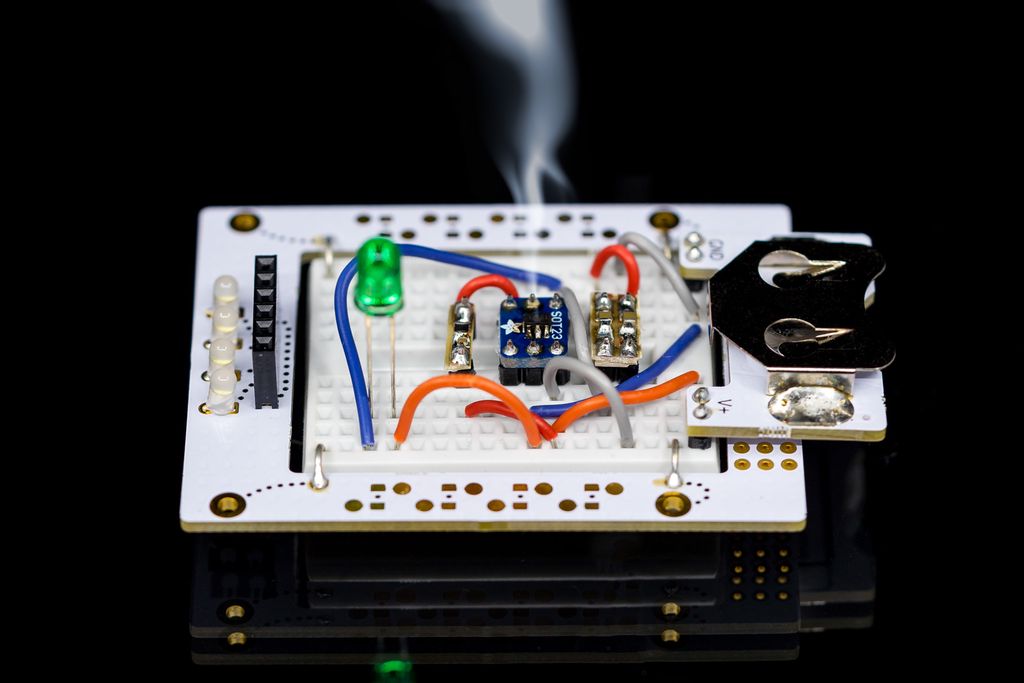
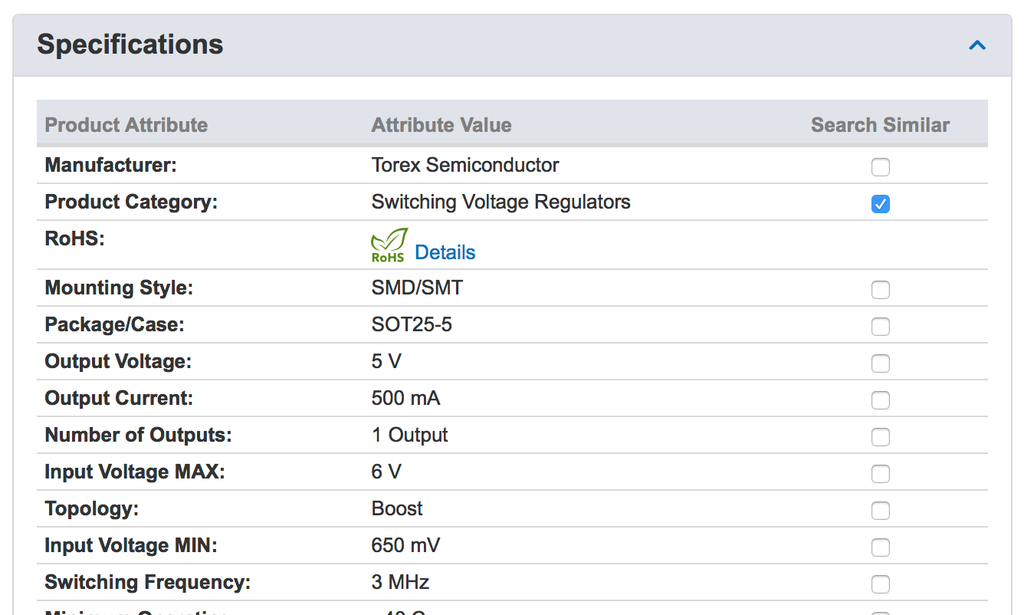
In the photo you can see the latest Boldport project with a test setup for the XC9142B50DMR-G from Torex Semiconductor. I made the mistake and just relied on the specifications stated on the website from Mouser:
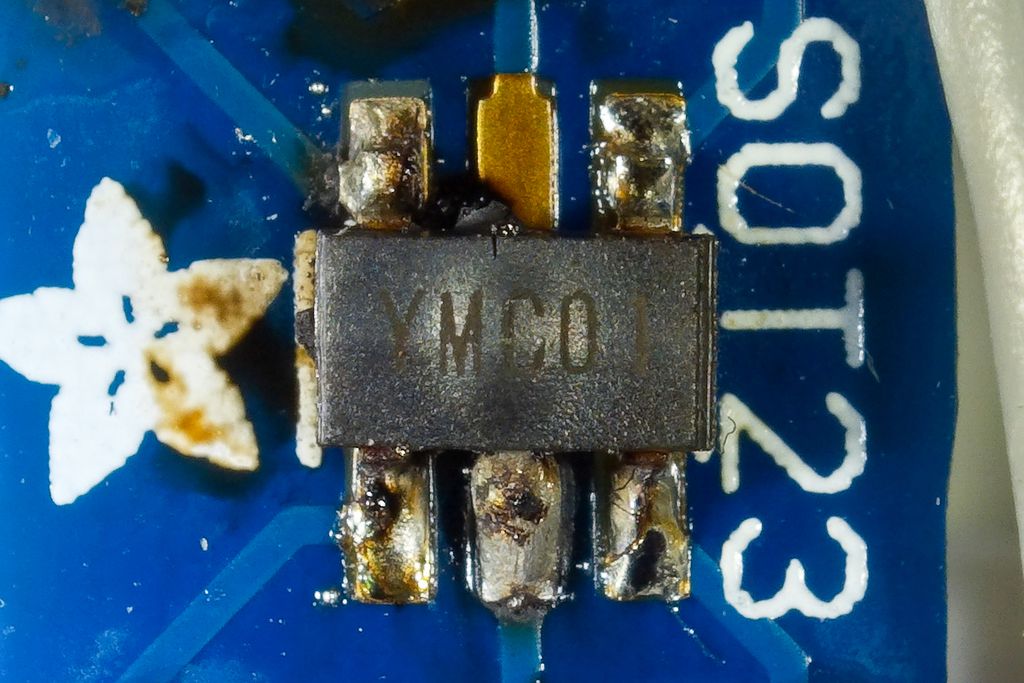
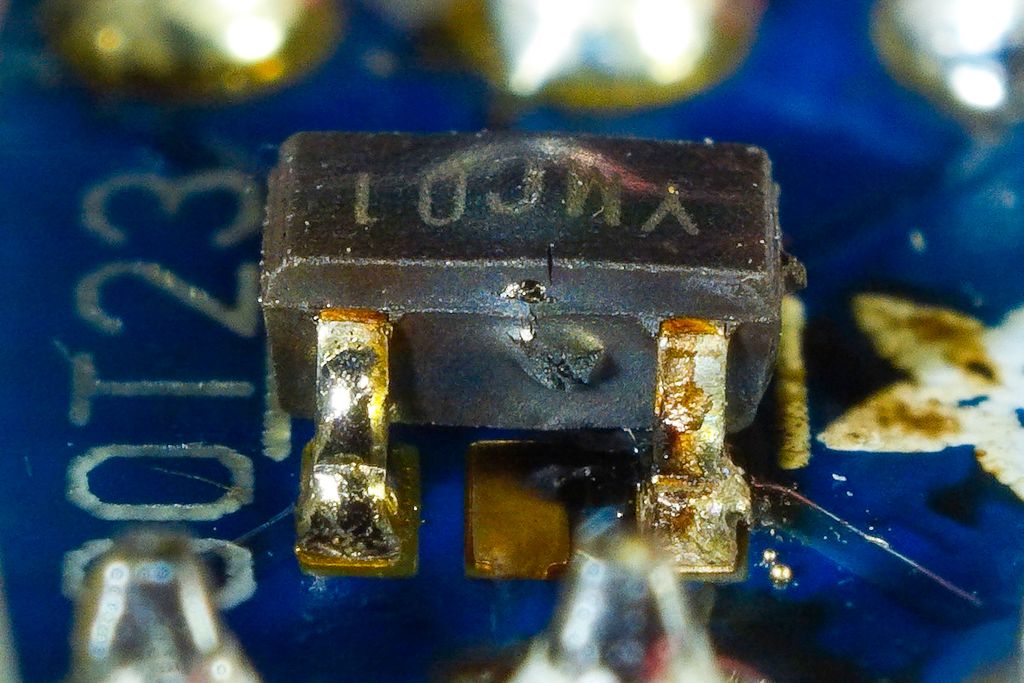
This looks really good: 500mA output current… So I did a quick test. Obviously the magic smoke in the photo is a composition, but this is what actually happened somewhere at a constant ~250mA load with 5V input.
Also the chip I selected does not disconnect the load on shutdown, which is a requirement for me. This was my mistake, read “D” but at the wrong position in the product identifier. :-D
If you have any suggestion for a replacement, please let me know!
This are my requirements for the part:
Input voltage 2.5-5.5V.
Output voltage fixed to 5V.
Output current >400mA over a long time (motors, heat elements).
Hand solderable SMD package.
Chip enable with high = enable.
Complete load disconnection in shutdown (another mistake I made with the selected chip).
If you have questions, miss some information or just have any feedback, feel free to add a comment below.
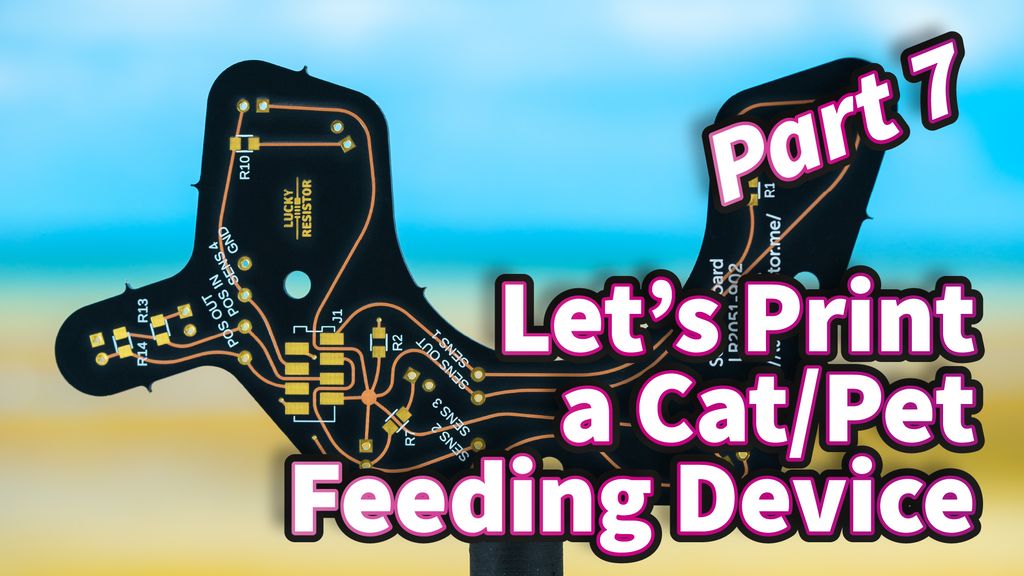
I walk through the sensor board I designed for the pet feeder, explaining the position sensor, four fill sensors, and why component choices (like the 100kΩ resistor) matter. I keep the design simple and practical — read the full post for schematics, measurements, and ordering details.
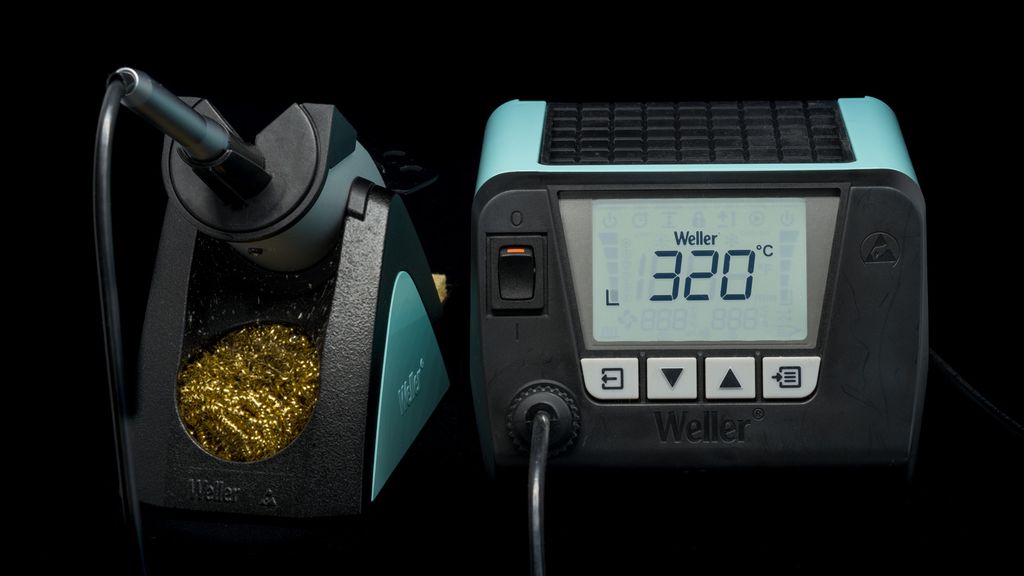
I bought a Weller WT solder station and appreciate its lightweight pencil, fast heating, and thoughtful features. Still, two persistent problems — a tip retainer that unscrews and one that deforms — reduced usability. I describe the issues, my contact with Weller, and the eventual retainer fix; read the full post for details.
I added a stable Hitachi LCD driver to the HAL layer, using an MCP23008 backend to cut wiring and simplify hardware. This post walks through parts, firmware repositories, and how to run the demo via serial shell. Read the full article for setup steps, code links, and usage tips.
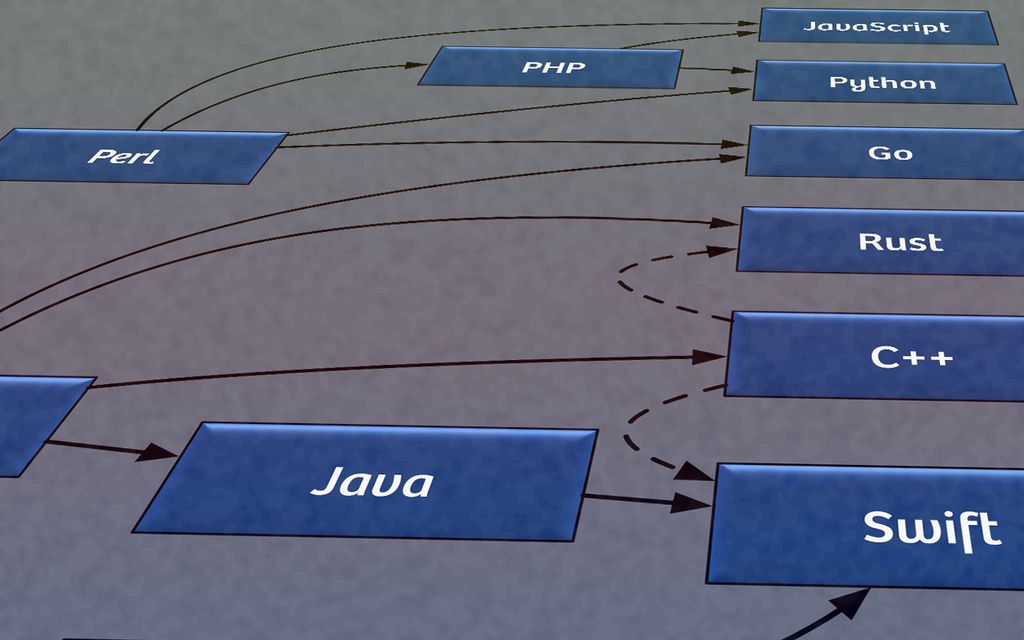
I've been developing software for over 20 years and share how my language preferences shifted—from assembler and C to Python, Swift, C++, Go and Rust. I outline use-cases and trade-offs in a personal, practical way; if you're deciding what to learn, please read the full post for detailed guidance.
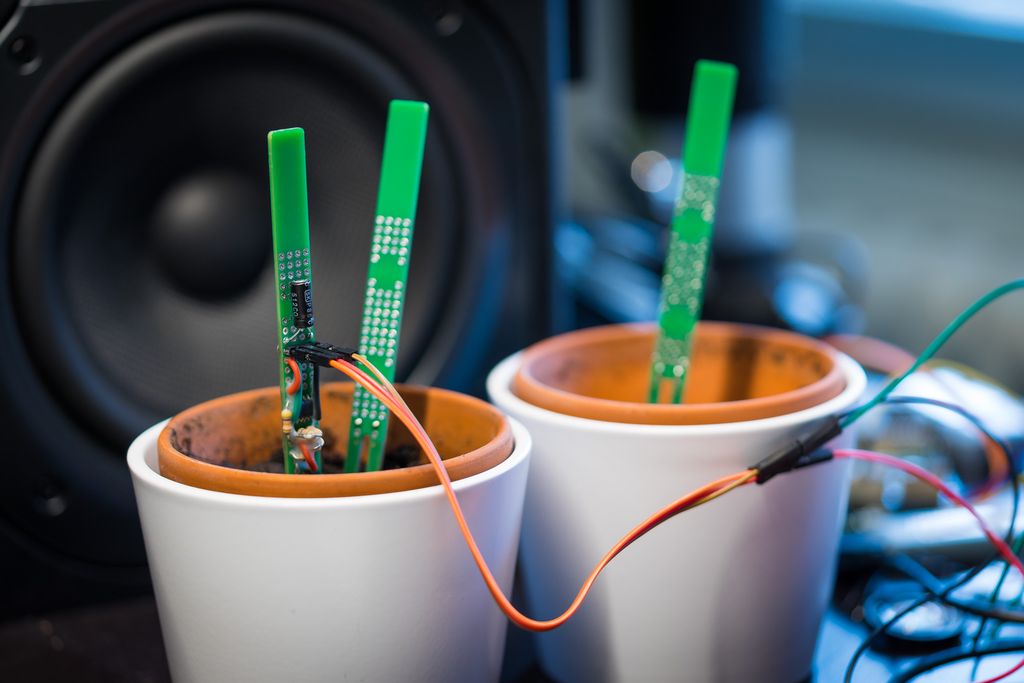
I walked through designing a cheap capacitive plant watering sensor, from goals and measurement options to component selection and early prototypes. I explain why I chose a CR2032‑powered op‑amp oscillator, ATtiny MCU and low‑power timer. If you’re curious, read the full post for details and test results.
I've released a small update to my LR2052 storage boxes: new split models (LR2052-300C-S), an extensive clickable PDF catalogue, more free models on Printables, and a new download area for buyers. I invite you to read the post for full details and download links if these designs help you.