published: April 22, 2017 —
last modified: October 23, 2025
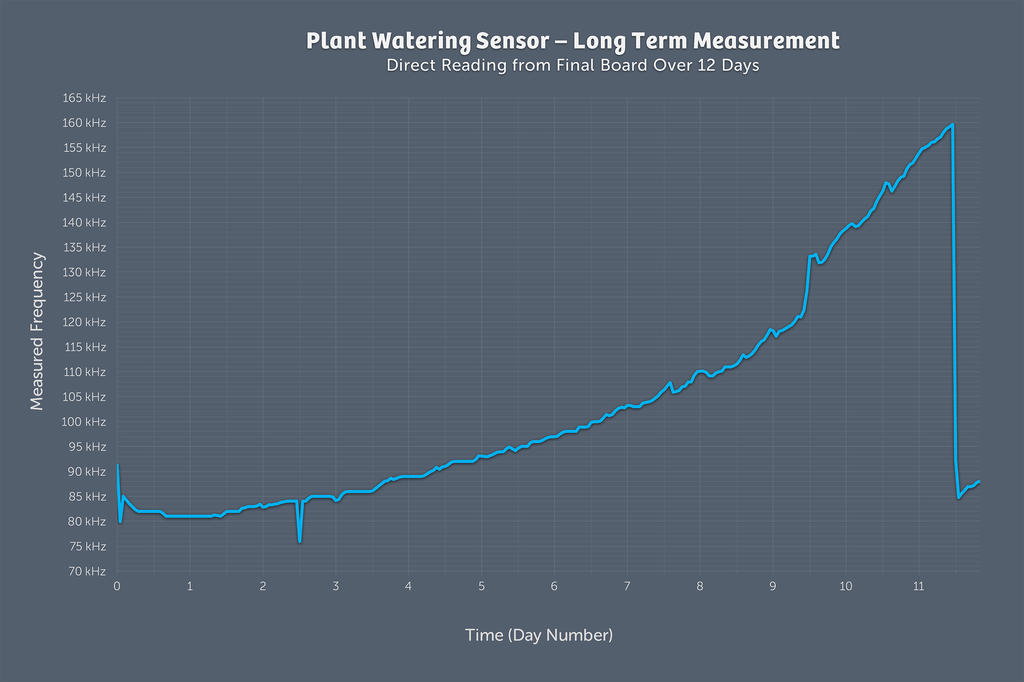
Using the new method of measurement, described in this post, I could successfully collect some meaningful data. This time, the read values are the exact values of the final sensor without a different kind of oscillator.
I watered the plant at day zero with quite a great amount of water. From there you can see how the frequency slowly rises, while the soil in the flower pot starts to get dry. There is a small measurement error between day two and three. Here I had a short power loss and no data was recorded which resulted in some zero records.
The reason why the water seems to dry up much faster at the end has to do with the weather. It got cold and the air humidity went down, which dried up the soil much faster than in the previous period.
It is very nice to see how stable and predictable the measurements are over this long time period. There are some fluctuations, which may affect the behaviour. In the worst case you get the flash signal only for a short time on and off, until the soil is dry enough to permanently enable it. If I look at the data, this usually will happen over a transition period of two to four hours which seems acceptable.
I am still working to find the best way to seal the foot part of the sensor. Here I found an epoxy coating is the easiest thing to do and get the best results. Now I try different resins and hardener combinations to find the best one for my dipping process.
After this step, I will write the next part of my article series with all the details about this finalising work on the project. Another topic will be the manual for the sensor.
If you have questions, miss some information or just have any feedback, feel free to add a comment below.
I developed a small application that generates randomized circle patterns inside a defined rectangle, letting you tweak width, height, precision, spacing and item counts. Results export to SVG and the latest version is available for download. Read the full post for interface details and usage tips.
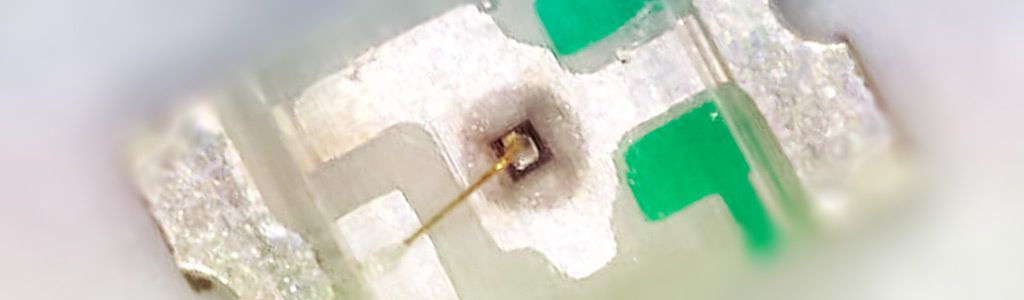
I photographed common SMD components through a microscope to reveal how small imperfections appear up close. I cropped each image for clarity and included a 1 mm scale and captions describing the parts. If you’re curious about what resistors, capacitors and tiny ICs look like under magnification, read on.
Posted on 2019-07-14— C++, Improve your Code, Learn
I wrote a concise guide for embedded developers to refactor Arduino/C++ firmware into clean, modular components. I walk you through creating Display, Buttons, and Animation modules, testing and committing small changes, and improving maintainability. If you'd like practical steps and examples, please read the full article.
I often reach for TE's Micro‑MaTch connectors when I need compact, hand‑solderable board-to-board connections. They saved me routing space and allowed SMD pads on tiny sensor boards. I share my requirements, examples, and practical tips — please read on if you're choosing connectors for small projects.
I published a detailed update to my stackable storage boxes project that adds new rail grid series, larger sizes up to 9×9, and improved catalogues. I outline design reasoning, alternative part-number placement, image and archive changes. If this sounds useful, please read the full post for downloads and printing notes.
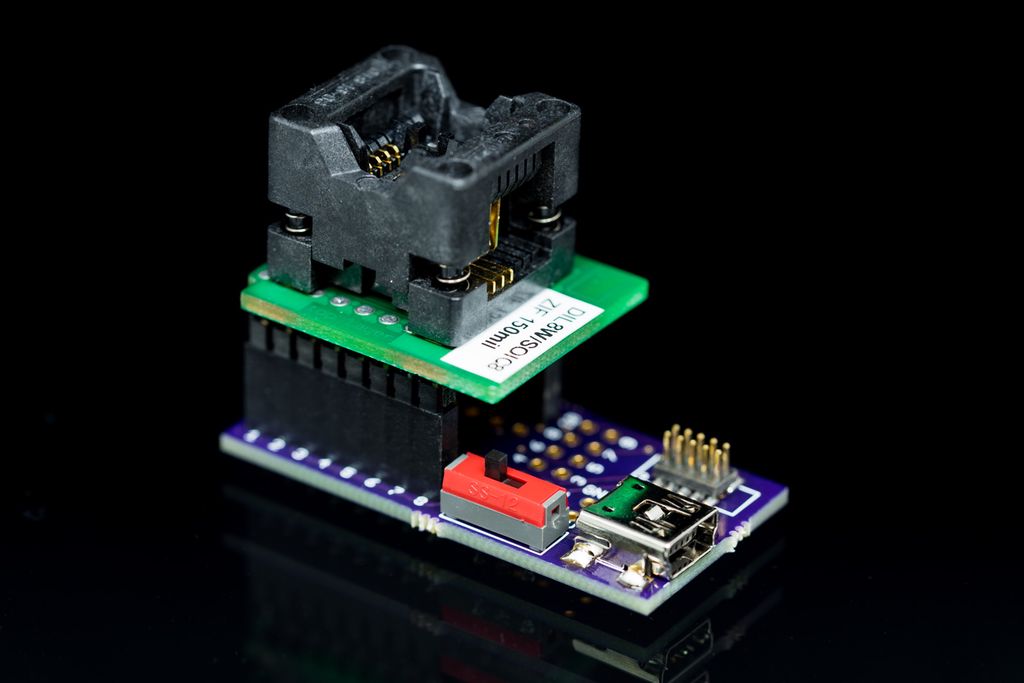
I built a compact ATtiny programming adapter to pre-program ATtiny13A chips before soldering, with a 50mil JTAG header, USB power, LED, and jumper options for other packages. I share EAGLE files, PCB ordering info and usage notes — read the post for photos, GitHub links and details.