published: March 20, 2017 —
last modified: October 23, 2025
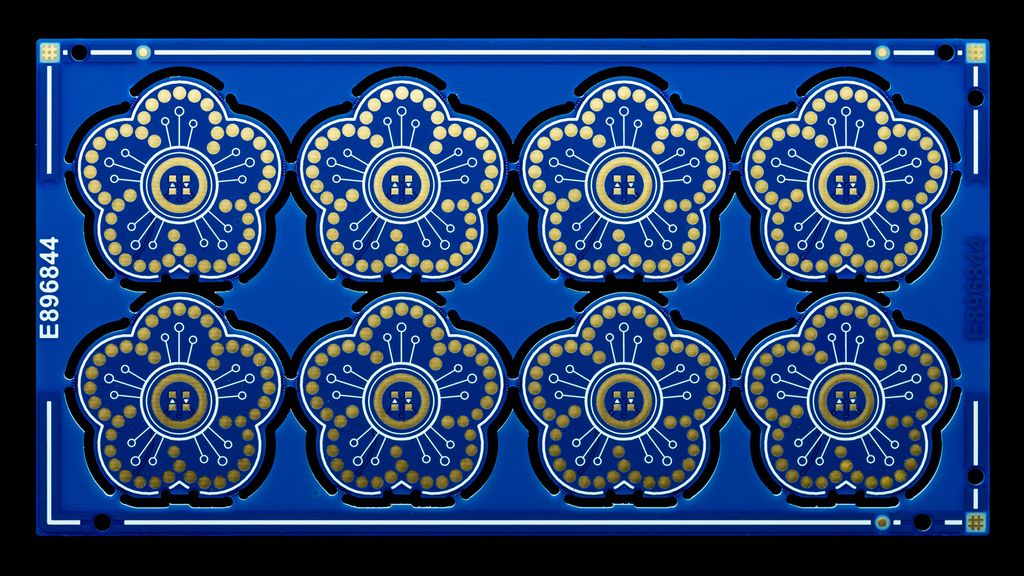
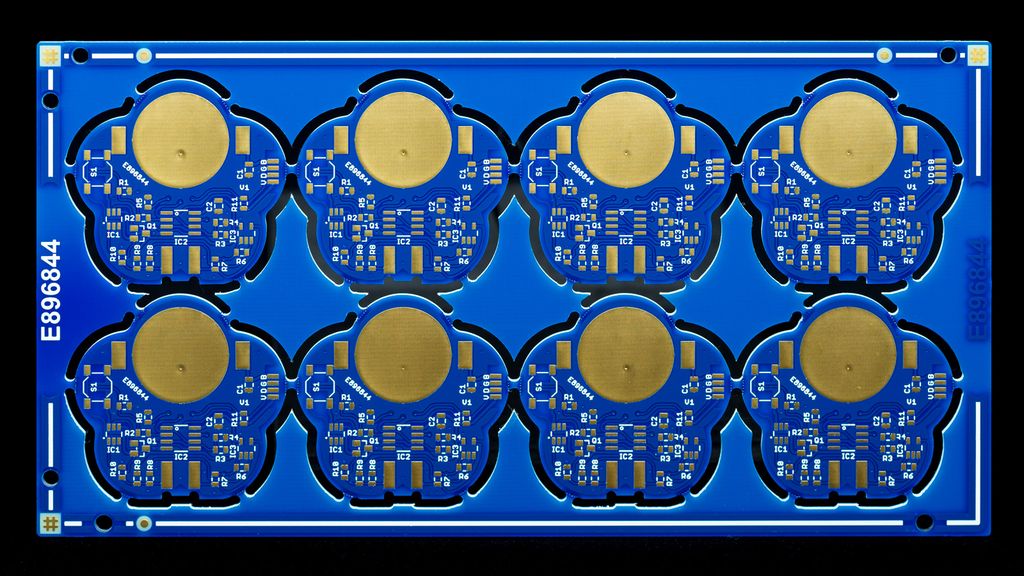
I ordered a single panel as a test for the production version of the plant watering sensor and I got astonishing perfect panels from Eurocircuits.
Even I only ordered just one, I got three perfect panels in gold. Thank you very much Eurocircuits! As you can see from the photos, the quality of the panels is just amazing.
This panels use the Eurocircuits registration system. This is a own set of rules for the registration holes around of the panel. Using these registration holes, I can easily align the stencil and the board on a special tool they produce. I will tell more about that in one of the next parts of the series “How to design a cheap plant watering sensor” (Read Part 1, 2, 3, 4, 5)
If you have questions, miss some information or just have any feedback, feel free to add a comment below.
I just received the Adafruit PCB coaster and was pleasantly surprised—photos don't do it justice. Made from 2.4mm FR4 with a transparent solder mask and black silkscreen, it blends cold and copper tones nicely. Read on for my quick impressions and close-up photos.
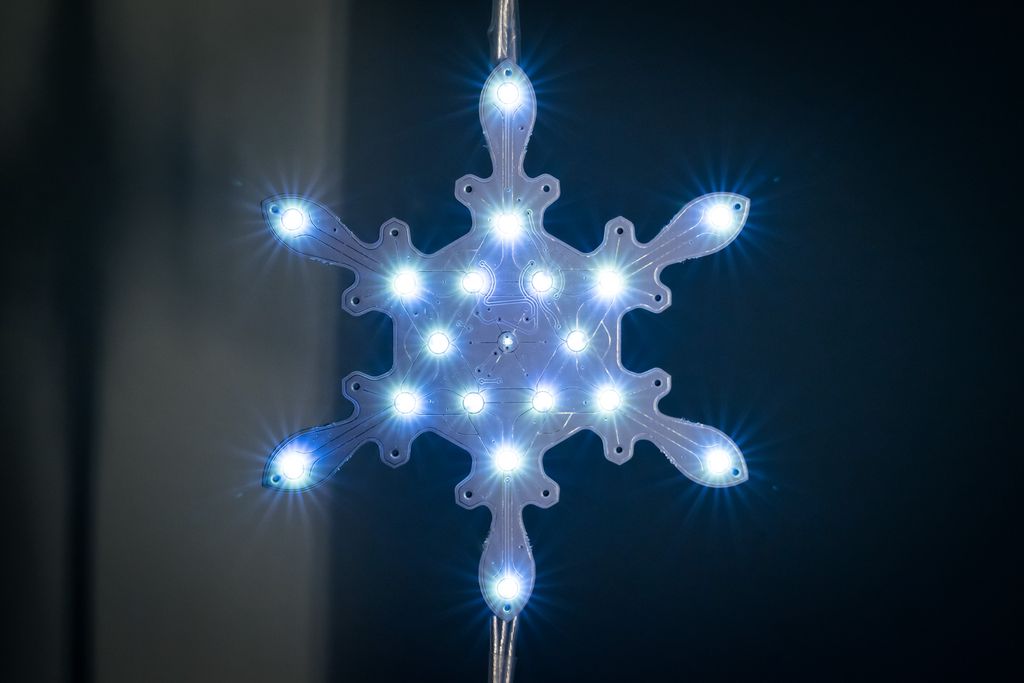
I wrote a concise page about my Snowflake project from late 2017, sharing open-source hardware designs and base firmware. If you have some electronics experience, you can build your own boards — it's a rewarding decoration. Read the full project page for files, repo links, and leave any feedback or questions.
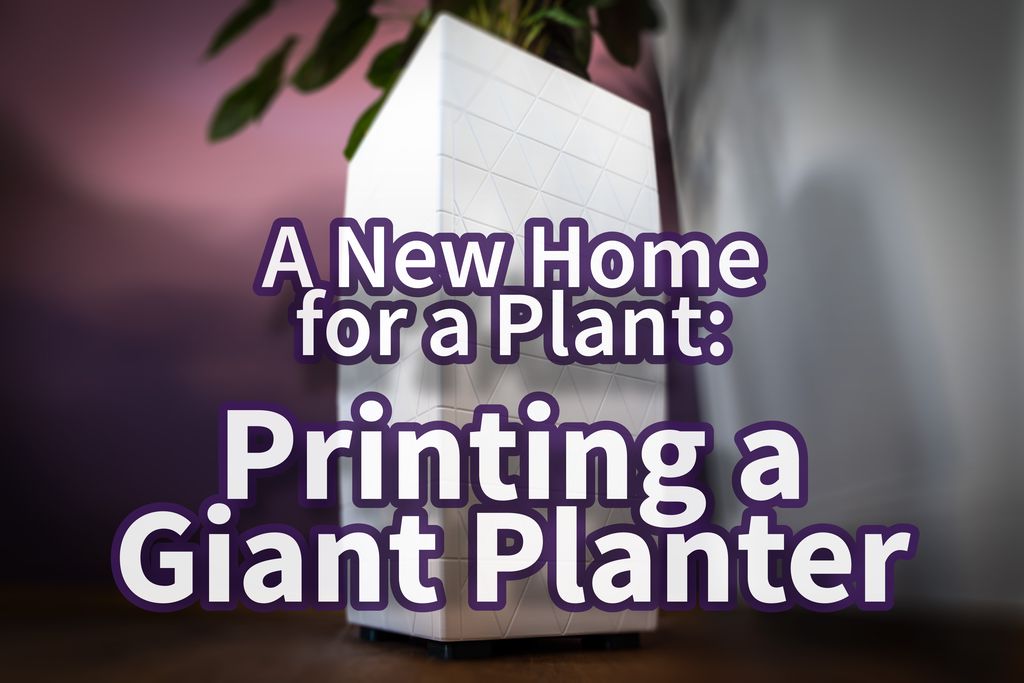
I walked through designing and 3D-printing a 70 cm PETG planter for my deep-rooted Ctenanthe. I share the tests, design choices, and practical fixes for warping, filament, split parts, and assembly. If you’re curious about large-scale prints or want the model files and tips, please read the full post.
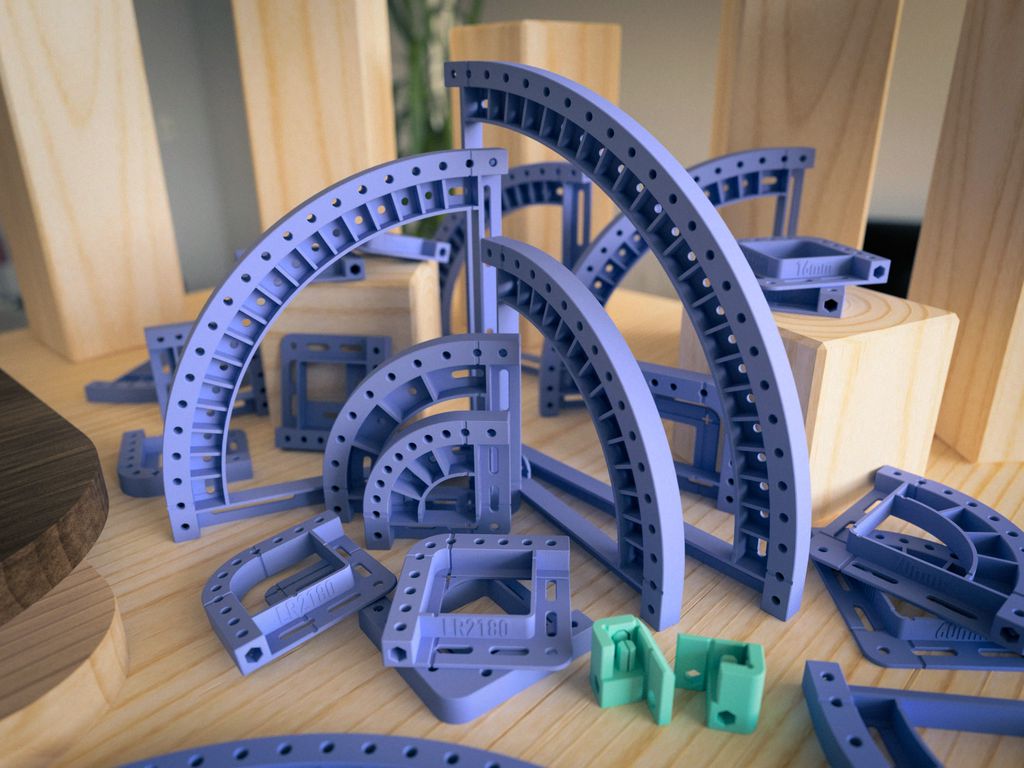
I designed a set of 3D-printable round corner templates specifically for woodworking and routing. They’re optimized for 0.4mm nozzles and 0.2mm layers, include snap-in guides, screw holes, and metric/imperial sizes. If you often rout rounded edges, read the full post for printing tips and mounting options.
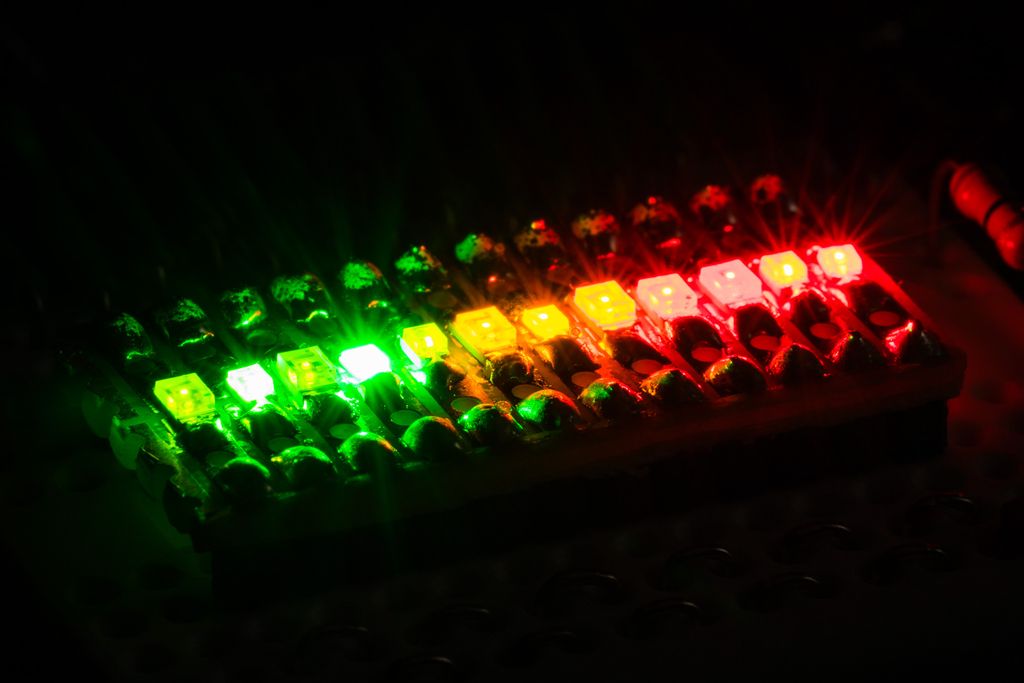
I tested 13 SMD LEDs for my plant-watering sensor project, soldering them to a small board and driving them from an Arduino Zero Pro to compare brightness and flash styles. I share photos, part numbers and a short demo video — read on if you’d like the full results and notes.
I uncovered an ancient stone with a mysterious multiplexed display — five inputs and six outputs. In this puzzle I explore what the display likely represents and invite you to find the longest continuous sequence of numbers it can show. Try the interactive panel and read the full post to solve it.