published: March 14, 2017 —
last modified: October 23, 2025
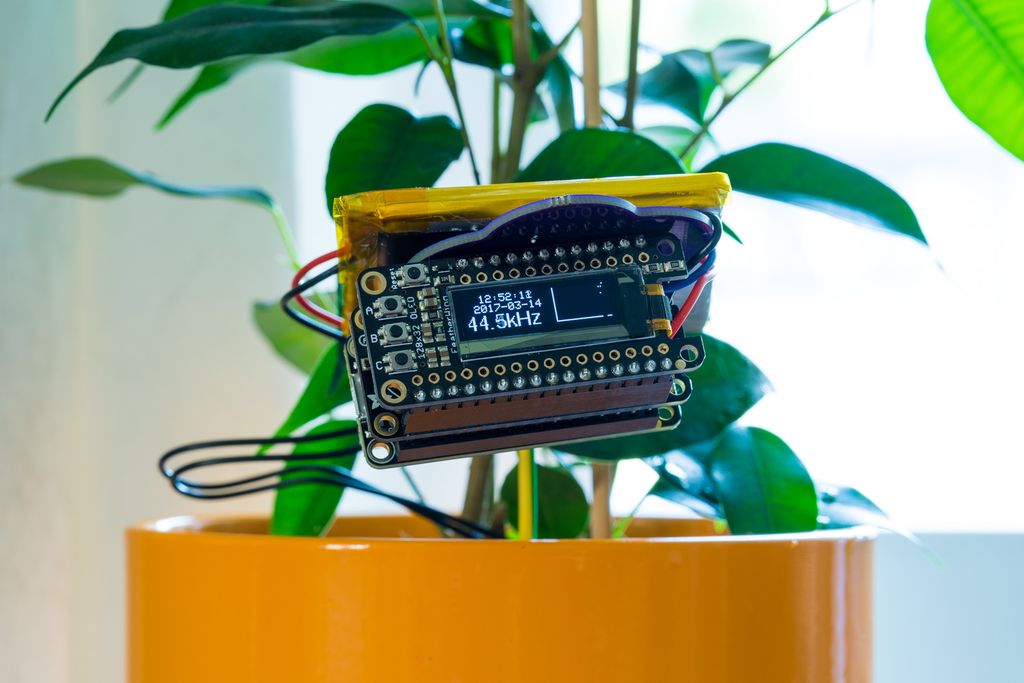
To gather more long-term measurements for the capacitive method I use for my plant watering sensor, I created this small logging device. As you can see, it uses one of the plant watering sensor prototypes for the measurements. Instead of using the ATtiny13A on the board, it passes the oscillator signal directly to the microprocessor of the logging device.
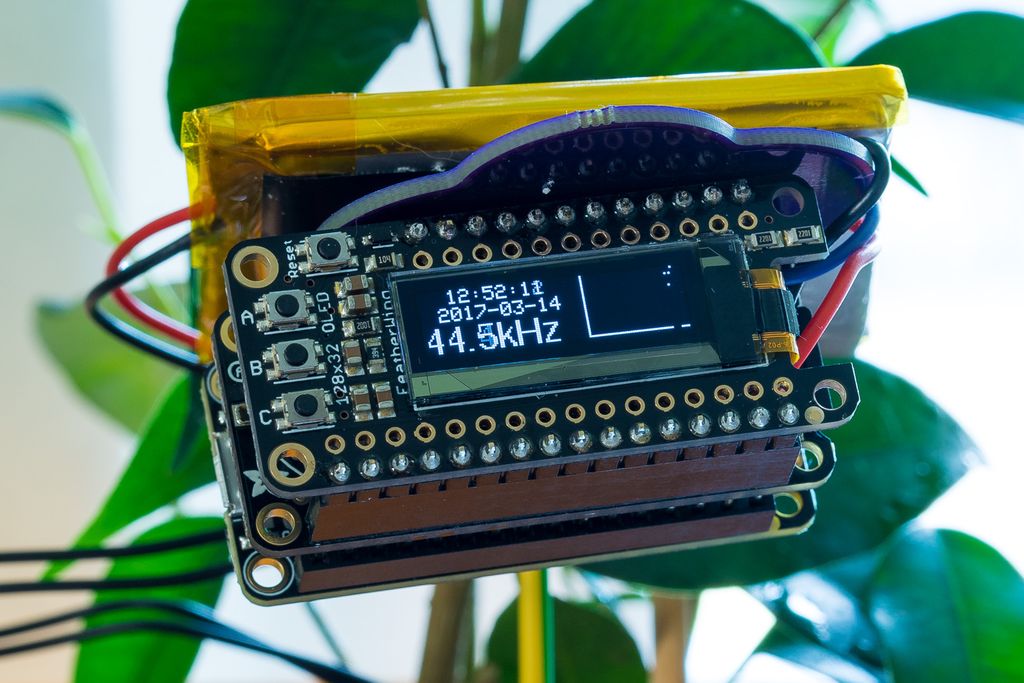
In front there is a very small 128×32 OLED display, where I can see the current measured frequency in kHz. On top, the current time and date is visible, and on the right there is a graph where I can see the values from the last 48 hours graphically. There is not much visible in the graph, because I took the photo just after installing the sensor.
Every minute, the current average of measurements is stored in a CSV file on a SD card. After a few weeks I should be able to analyse this file and see the results. Here I am especially interested in the cycles from watering the plant until the soil got dry again.
Aside from the plant sensor prototype, I used these components to build this device:
Adafruit Feather M0 Proto
A microcontroller board with the Atmel SAM D21 (AMD M0) 48MHz chip and logic to use and charge a lithium ion battery from the USB port on the board.A microcontroller board with the Atmel SAM D21 (AMD M0) 48MHz chip and logic to use and charge a lithium ion battery from the USB port on the board.
Adalogger FeatherWing
A great shield which contains the PCF8523 real time clock and a SD card slot. There a battery holder for a CR1220 battery to keep the RTC running.A great shield which contains the PCF8523 real time clock and a SD card slot. There a battery holder for a CR1220 battery to keep the RTC running.
Adafruit FeatherWing OLED
A very nice tiny shield to provide a OLED display to a project. It contains the SSD1306 driver with the UG-2832HSWEG02 display. It has a very high contrast, so even tiny characters are perfectly readable.
This is a great example, how very useful and complex devices can be made in a very short time-period using the modules available today. I really love the Adafruit Feather boards, because they not only contain the microcontroller, but also the required components to use and charge a lithium ion battery. This boards are also very small and can be integrated into almost anything.
I used the Feather M0 to have a powerful 48MHz microcontroller with vast amounts of flash memory and RAM. There are enough resources to easily analyse the signal and do floating point calculations without mind performance. The whole device, including the display using just around 1mA while running. It should run for weeks with the battery, and I can always recharge the battery using a USB battery pack without the need to remove the device or turn it off.
If you have questions, miss some information or just have any feedback, feel free to add a comment below.
I guide you through building a compact particle sensor node using a Raspberry Pi Zero W and a minimal custom shield, with published Gerbers, STL files and example code. I keep the design simple and extendable—if you'd like to build your own networked air-quality node, read the full post for parts, assembly and setup.
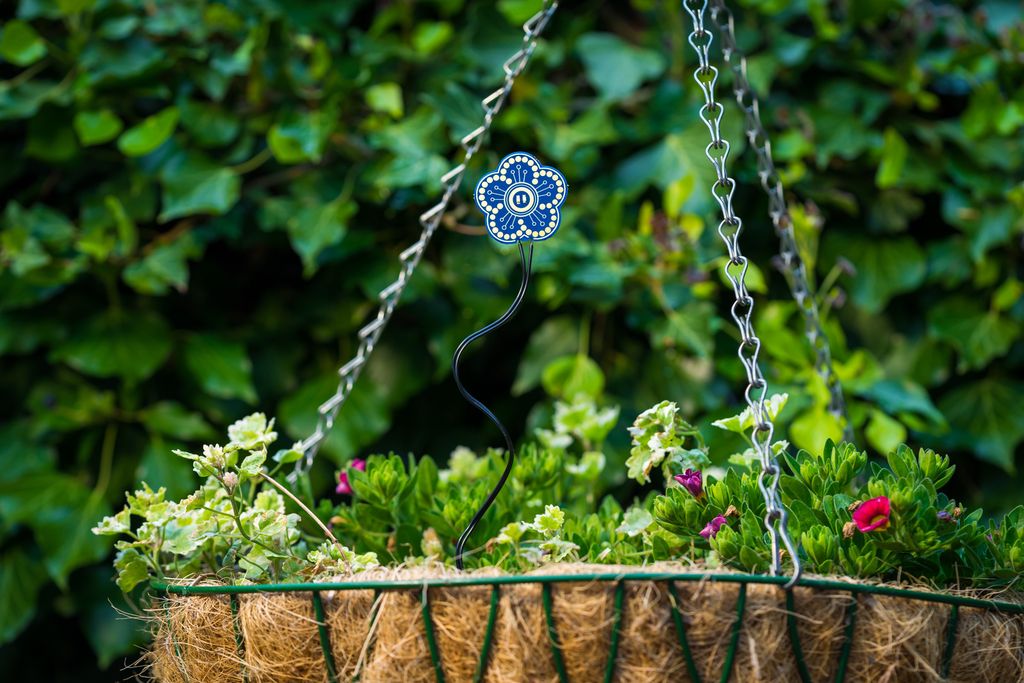
I wrote a concise page about my Snowflake project from late 2017, sharing open-source hardware designs and base firmware. If you have some electronics experience, you can build your own boards — it's a rewarding decoration. Read the full project page for files, repo links, and leave any feedback or questions.
I updated my pet-feeder's drive with a TMC2209 SilentStepStick and a 17HS19 stepper to get near‑silent operation and run from 5V. I built a simple Pico-based controller, adjusted gearing for speed, and tested sensors. Read the full update for photos, choices and test notes.
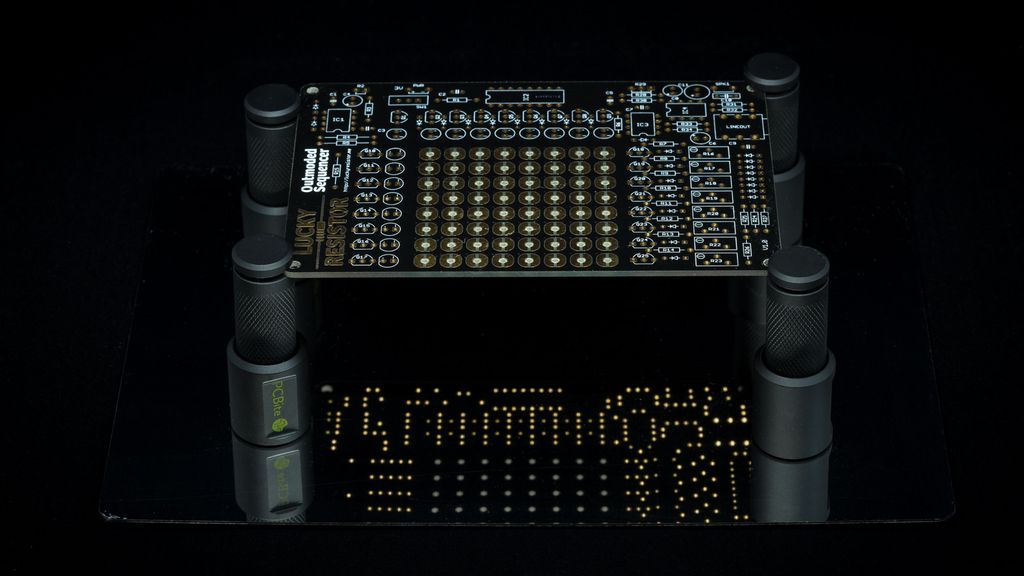
I recently tried PCBite, a compact magnetic PCB holder with a mirrored base and adjustable posts. It makes soldering and inspection easier than my old helping-hands. I share close-up photos, usage notes, and where to buy a set—please read on if you’re curious about a simple, solid solution.
I finally published all design files and documentation for my plant watering sensor project. The package includes PCB layouts and firmware, but this is an advanced build: it needs SMD reflow, Atmel Studio and an Atmel-ICE programmer. If you're interested, please read the full post and the GitHub repo for details.
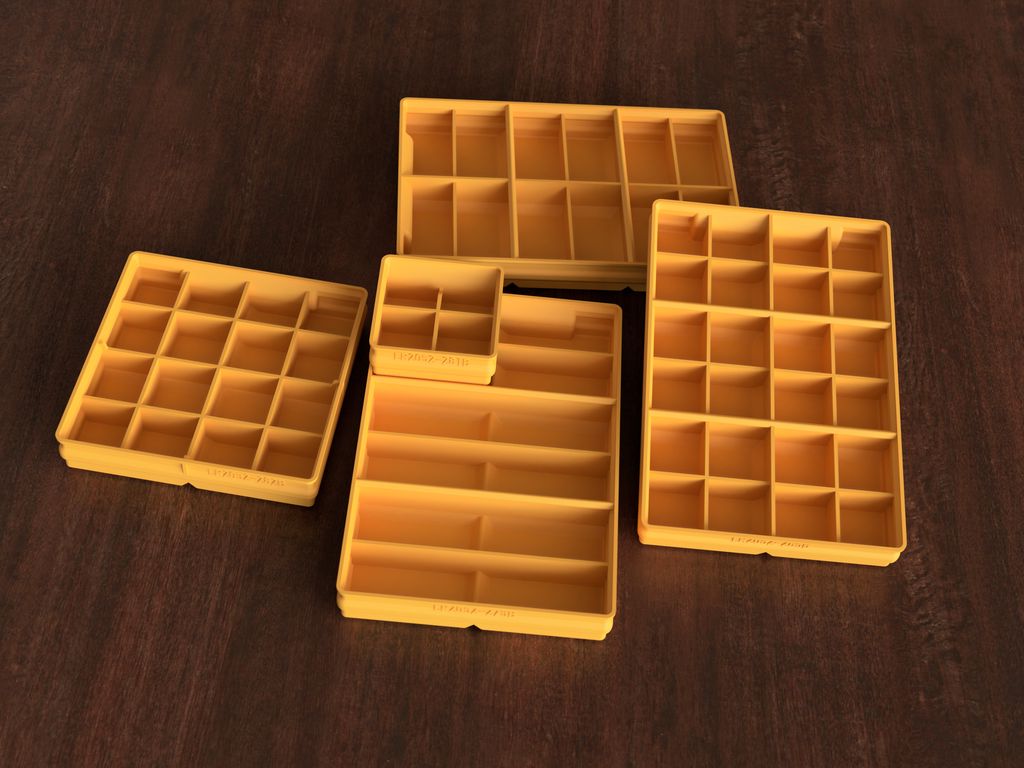
I've updated the flat boxes set with a refined wall profile (revision B) and added five new boxes, including a large 2×4 and four grid variants. I show corner comparisons and note existing customers received files. If this is useful, please check the full project details on the project page.