published: February 16, 2017 —
last modified: October 23, 2025
Today I tested a number of SMD LEDs for the plant watering sensor project. I soldered all 13 LEDs I shortlisted onto a small board and connected it to an Arduino Zero Pro. So I could try the different flashing styles I planed to use more or less automatically. That way I could focus on the LED flashing itself, without being distracted by switching cables.
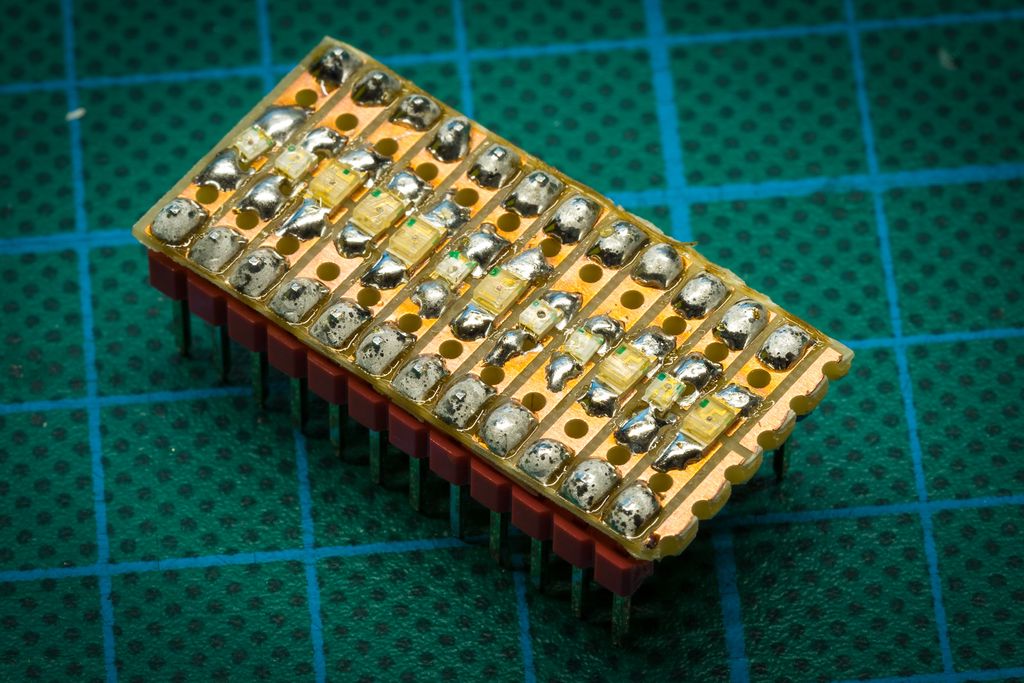
This is the board I made. Very simple but functional. I used red and blue male header to mark the anode and cathode of the LEDs. There is a sticker on the bottom with the LED numbers on it.
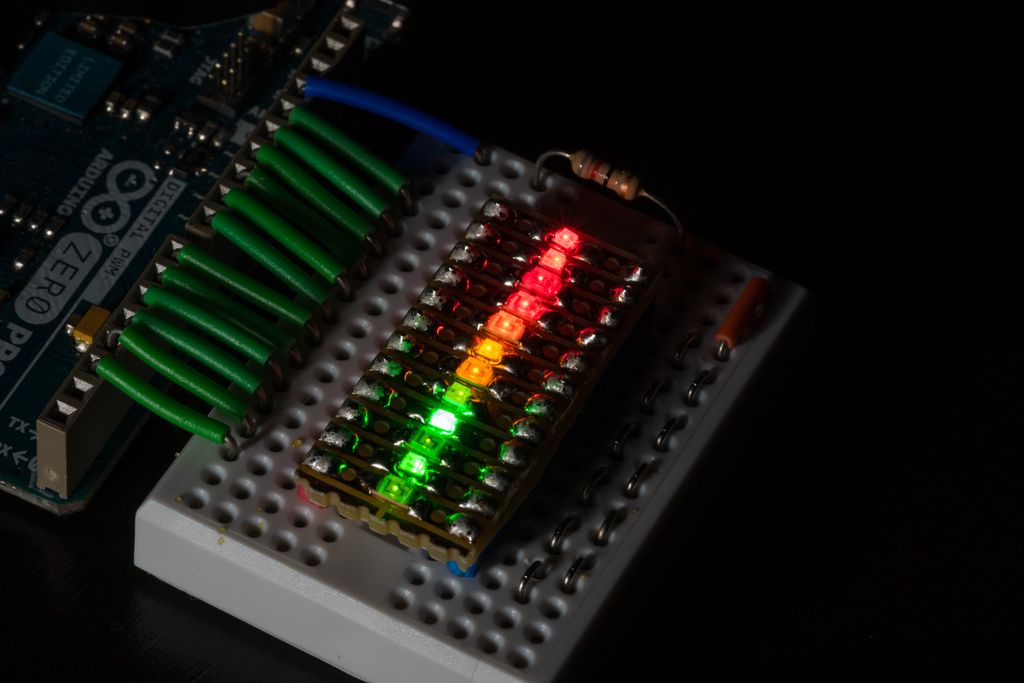
I mounted everything on a very small breadboard and did all connections to the Arduino.
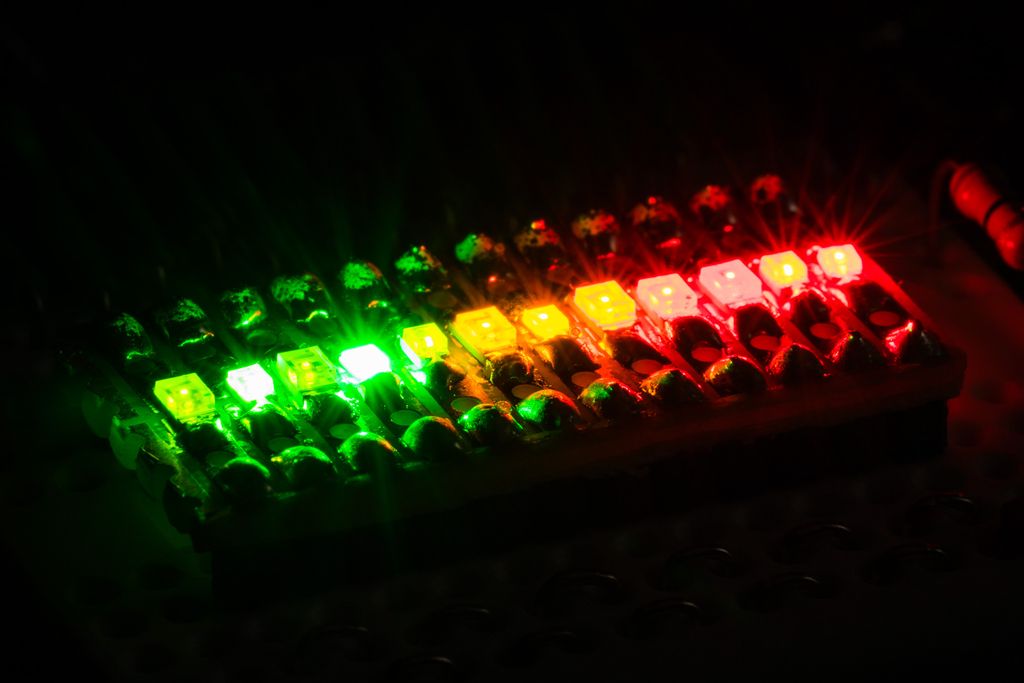
You can clearly see the difference between the LEDs. With the eyes, the difference is even more visible. It is very interesting how much light all these LEDs produce from more or less the same 20mA. To be fair, because of the different voltages, not all LEDs got the same current - the test was very specific for my intended use with a 3V coin cell.
And the Winner is…
Absolutely the LEDs from Sloan. Especially the green LED with the product number SMD-G0805-02 is impressive - the colour and brightness is almost surreal. I had to double check this LED really only draws 20mA for this incredible brightness. A short 40ms flash from this LED is even at normal daylight very good visible.
The List of Tested LEDs
You can see from on the photo from left (1) to right (13).
Nr
Colour
mcd
mA
Vf
Article Number
1
Mega Green
200
20
2.1
Kingbright KP-3216SEC
2
Brilliant Green
405
20
3.3
Everlight 17-21/GHC-XS1T2M/3T
3
Super Bright Green
12
20
2.2
Kingbright KP-3216SGC
4
Green
520
20
3.2
Sloan SMD-G0805-02
5
Brilliant Yellow Green
90
20
2.0
Everlight 17-21/G6C-AP1Q1B/3T
6
Super Bright Yellow
80
20
2.0
Kingbright KP-3216SYC
7
Yellow
140
20
2.0
Sloan SMD-Y0805-02
8
Super Bright Orange
200
20
2.0
Kingbright KP-3216SEC
9
Hyper Red
230
20
1.95
Kingbright KP-3216SURC
10
Super Bright Red
100
20
1.85
Kingbright KP-3216SRC-PRV
11
Red
100
20
1.9
Sloan SMD-R0805-02
Video
Just for fun, here a video where I used the test setup to create an animated chain of lights.
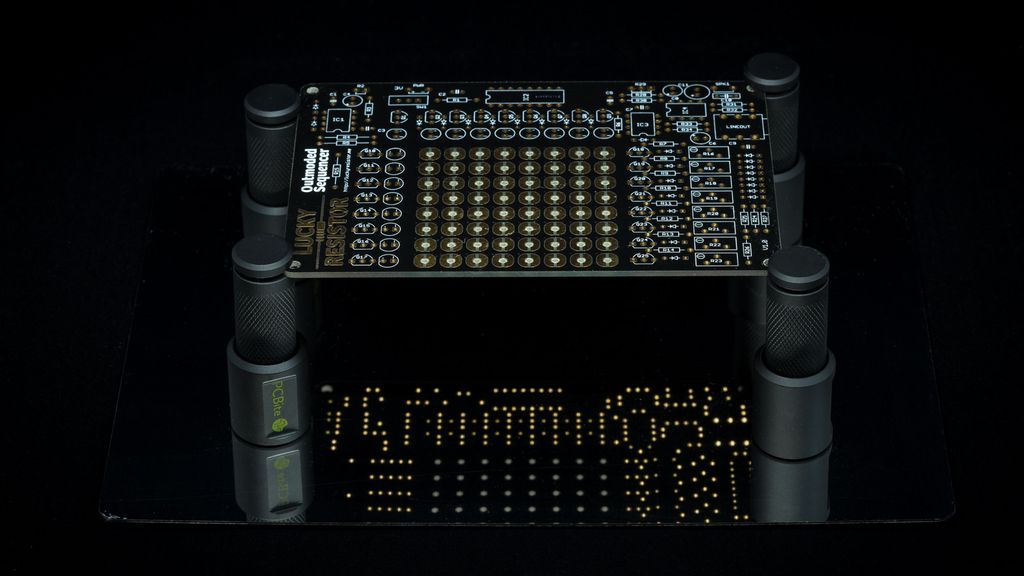
I recently tried PCBite, a compact magnetic PCB holder with a mirrored base and adjustable posts. It makes soldering and inspection easier than my old helping-hands. I share close-up photos, usage notes, and where to buy a set—please read on if you’re curious about a simple, solid solution.
I’ll walk you through my parametric, heavy wood-and-acrylic 3D-printer enclosure — from choosing boards and adjusting the Fusion 360 model to cutting parts, assembly, and 3D-printed hinges. If you want a stable, customizable enclosure for your printer, read the full tutorial for measurements, photos, and tips.
I designed a modular 19th‑century‑style lantern you can 3D print as a candlelight or expand into an LED street‑lamp stand. Read on for my glue‑free assembly, colour‑layer printing tips, and stand options — or jump to the Printables page for downloads and print instructions.
I updated my pet-feeder's drive with a TMC2209 SilentStepStick and a 17HS19 stepper to get near‑silent operation and run from 5V. I built a simple Pico-based controller, adjusted gearing for speed, and tested sensors. Read the full update for photos, choices and test notes.
Posted on 2019-07-08— C++, Improve your Code, Learn
I guide you through evolving a simple Arduino blink example into a reusable event system. In Part 2 I cover function-pointer events, an EventLoop module, and practical multi-event examples. If you want cleaner, non-blocking firmware structure, read the full post for code and explanations.
I just received the PCBite Kit 2.0 from Sensepeek and explored its mirror board, magnetic pogo-style probes, and PCB holder. I found the gold needle tips and crown forks helpful for accessing tiny pads without test points. If you work on soldering or circuit analysis, read on for my hands-on impressions.