published: January 20, 2017 —
last modified: October 23, 2025
Today most chips are only available in SMD packages, therefore I often need adapter boards for prototyping. There are only a few manufacturer of adapter boards and they are often very expensive. I think the reason for the high price is, because most of this boards are made to replace DIL chips in devices with SMD ones. So this boards require a certain quality for this productive use.
For prototyping this is not my greatest concern. In most cases I am happy to get chips working and be able to experiment with them. I am aware there are many limitations on a breadboard, so the adapters do not have to be electrical perfect for my use. Spending $6-$9 per adapter, often for a single use, for a chip which costs only a few cents seems wrong to me.
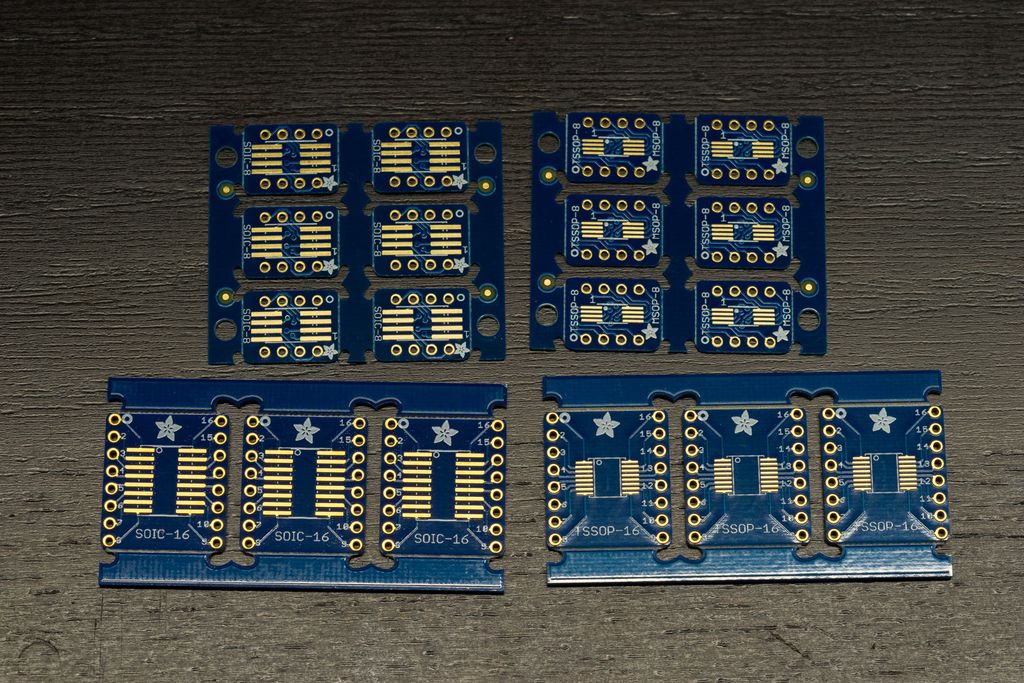
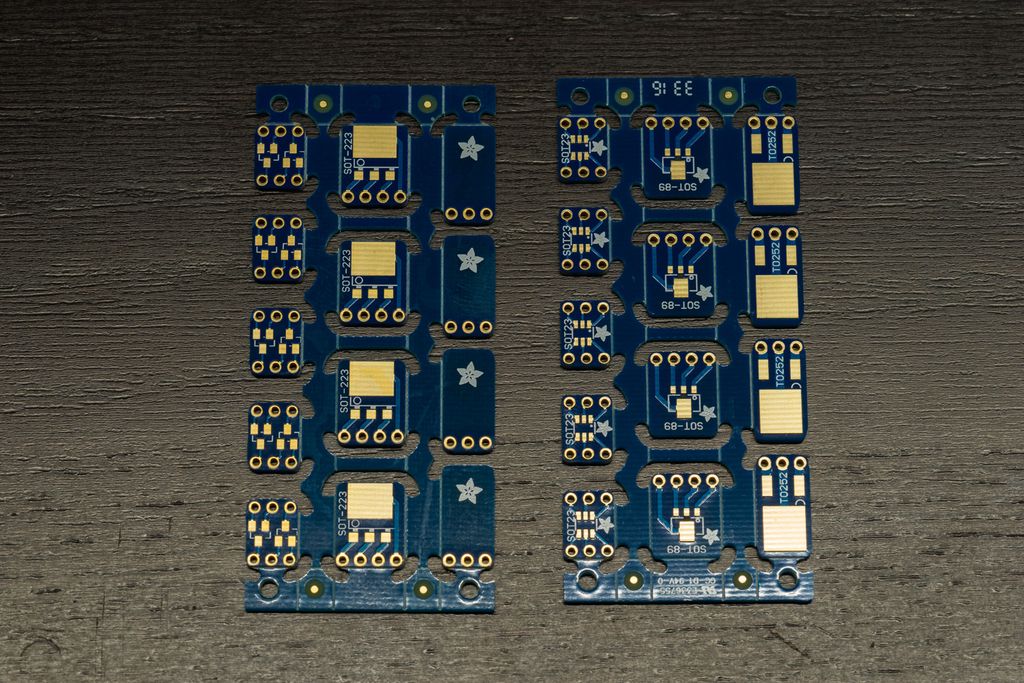
Now I discovered, Adafruit has a nice set of SMD adapter boards in their shop. You always buy a set of three, six or even more, and they have different package sizes on both sides. It is exactly what I would expect from an adapter board for prototyping.
Have a closer look in Adafruits shop here, here and here.
I’ve published a simple firmware example for the Always-On project, built for PlatformIO and Visual Studio Code with my HAL adapted for Adafruit Feather M0. It explains the hardware mapping, motion-triggered lighting behavior, and timing options. Please read the full post for setup instructions and the GitHub link.
I created a readable, fully inline AES‑256/CBC implementation you can drop into C++ projects — handy for embedded systems. It avoids static S‑Boxes, needs only stdint/cstddef, and is MIT‑licensed on GitHub. If this sounds useful, read the full post for requirements, example code, and usage notes.
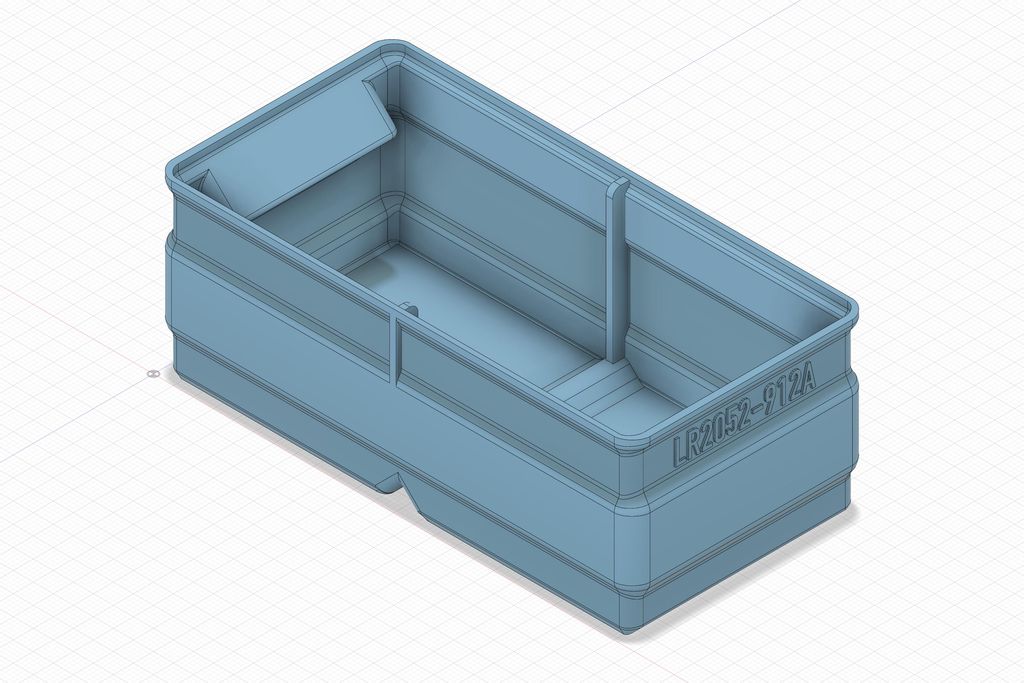
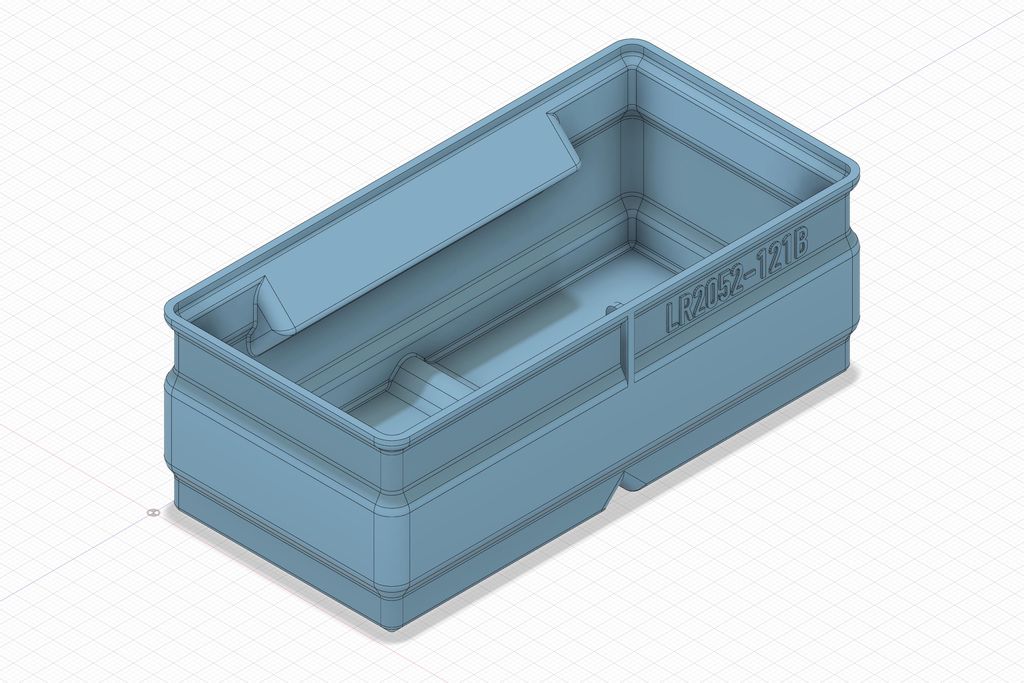
I designed an experimental storage box for 45° belt printing and shared the STL for others to try. I haven't printed it myself, so it's a best-guess layout optimized for 0.2mm layer height and common nozzles. If you have a belt printer, please test it and tell me how it performs, and read on for details.
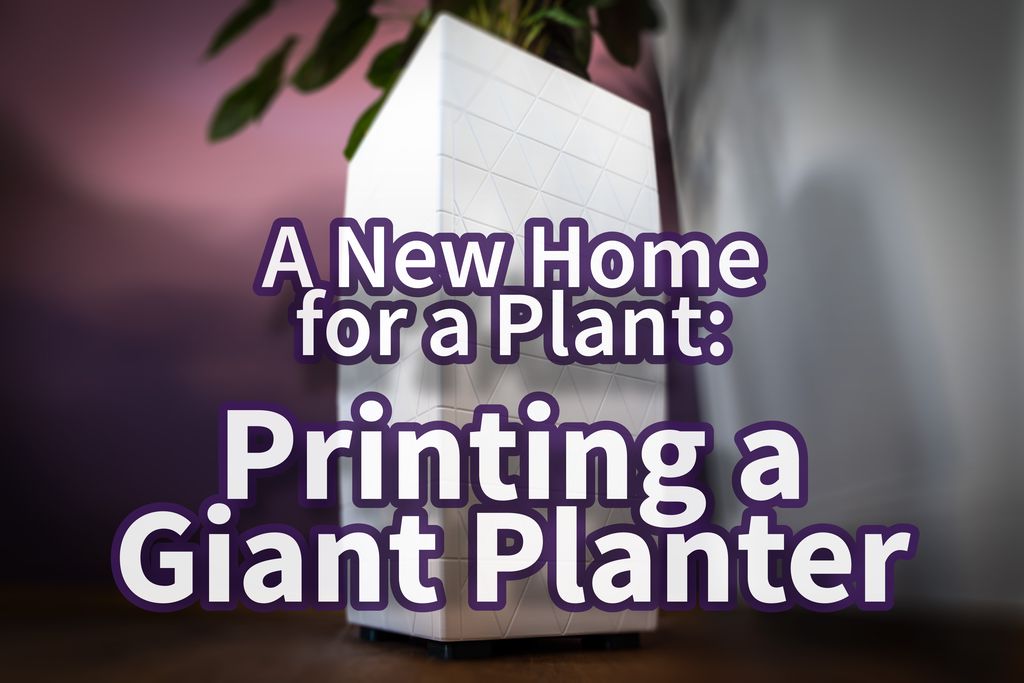
I walked through designing and 3D-printing a 70 cm PETG planter for my deep-rooted Ctenanthe. I share the tests, design choices, and practical fixes for warping, filament, split parts, and assembly. If you’re curious about large-scale prints or want the model files and tips, please read the full post.
I've released several new 3D-print storage boxes with the label area moved to a different side so identical boxes can sit in a drawer with labels aligned. I explain size variants, rib adjustments, and how to download updated files. Please read the full post to see illustrations and the catalog link.
Posted on 2019-07-20— C++, Improve your Code, Learn
I walk through C++ templates for embedded projects, showing how function templates work, why they’re type-safe, and how they can keep firmware small and fast. Using Arduino examples like circularShift, reverseBits and a template-based Sender, I invite you to read the full post to learn practical tips and patterns.