published: September 16, 2016 —
last modified: October 23, 2025
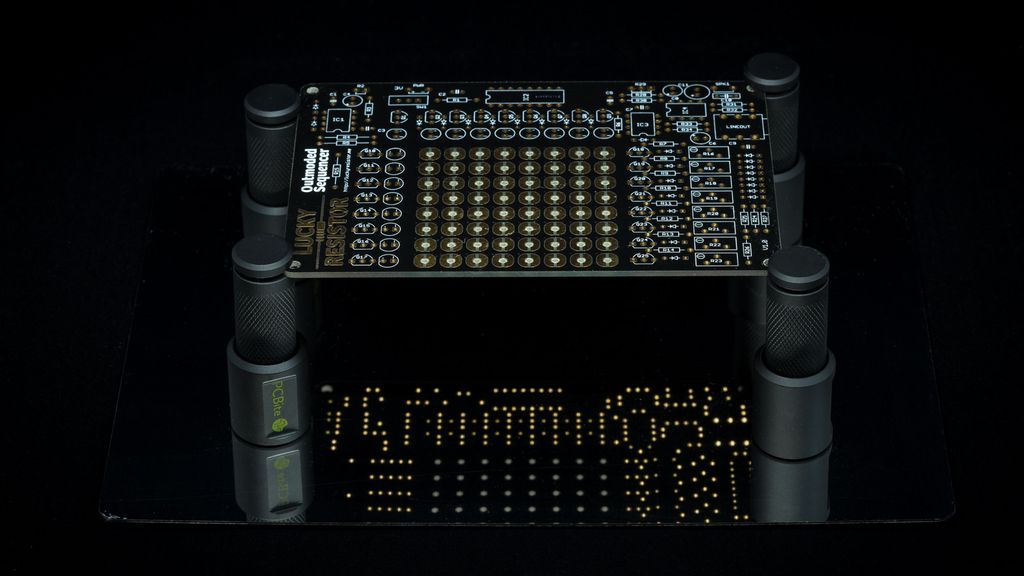
I recently ordered a set of “PCBite”. These are special PCB holder as shown in the images in this post. To solder components into PCB I sometimes used one of this many “helping hands” products with two clamps, but they are no real use in most cases.
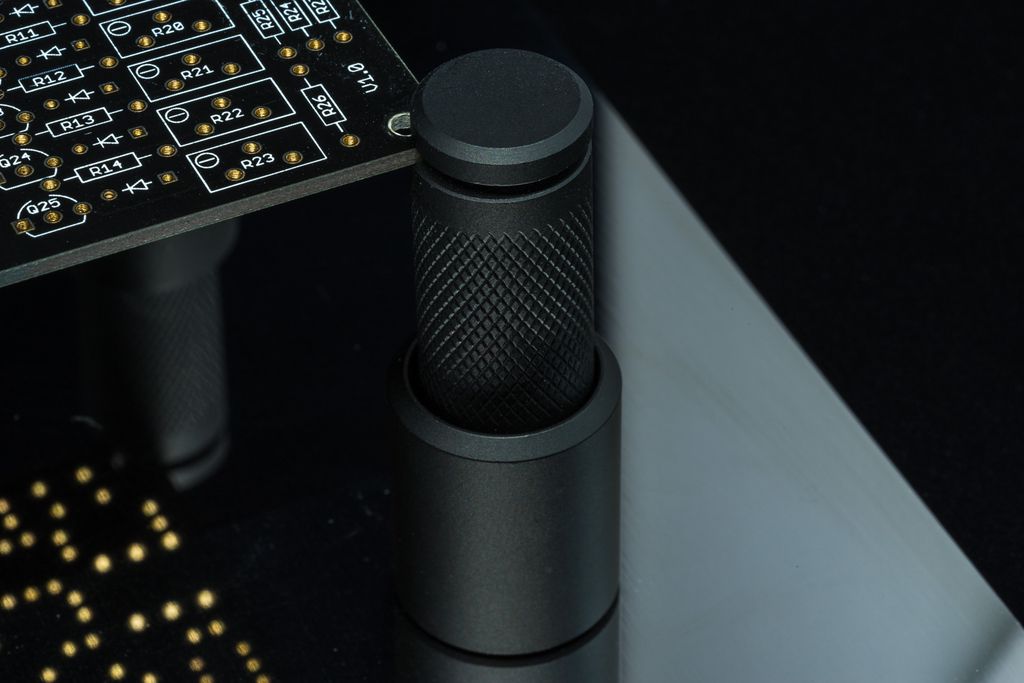
PCBite seems to solve some of the problems very well. You get a metal plate with a mirror finish and four of this cylinders which have a very strong magnet in the base. The middle part of the cylinder with the grip on is can be moved down and the PCB fastened that way. It is very solid and two would be enough to hold the PCB easily.
The mirror finish makes the bottom side of the PCB easily visible so you can solder on the top side and keep the component in view.
You can get you own set for $79 here, this includes free shipping. The quality of this PCB holder is outstanding. If you look at the close up photo, you see the perfection how this tool was made. I can really recommend this PCB holder.
Currently I am working on the final assembly of the Outmoded Sequencer, it looks very promising. There will soon be an update with all details about the final device.
I guide you through writing a near-final firmware for my cheap plant watering sensor, describing module structure, incremental development, and practical tests. I cover ADC sampling, oscillator checks, EEPROM settings and a prototype fix for the push-button. If you’re building a similar device, I invite you to read the full post.
Posted on 2019-07-16— C++, Improve your Code, Learn
I introduce C++17 structured binding with approachable examples: returning multiple values via std::tuple, binding to structs and arrays, and using references to avoid copies. If you use a C++17-capable compiler and want cleaner, clearer code, read the full article for practical examples and tips.
Posted on 2019-07-27— C++, Improve your Code, Learn
I continue exploring C++ templates for embedded systems, showing template classes, pin abstraction, and combining Sender and Pin examples to reduce firmware size and improve code clarity. I explain static methods, type aliases, and trade-offs between runtime flexibility and efficiency. Read the full post to see code and assembly comparisons.
I designed a modular 19th‑century‑style lantern you can 3D print as a candlelight or expand into an LED street‑lamp stand. Read on for my glue‑free assembly, colour‑layer printing tips, and stand options — or jump to the Printables page for downloads and print instructions.
I received 3mil polyimide stencils from OSH Stencils for my Swiss precision timer project. They feel flimsy compared to the steel stencils I usually use, but cost much less. I’ll test solder paste application and the first prototype in the coming weeks — please read the full post for results.
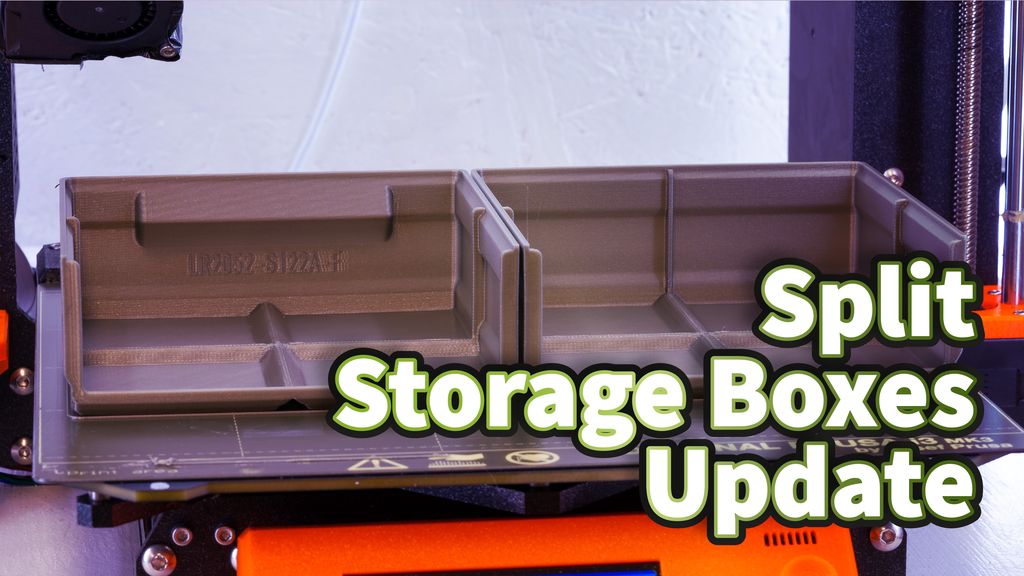
I recently updated my storage-boxes system to include split boxes so you can print larger containers or use small printer beds. I tested glued joints with PLA and PETG and added 12 new STL parts. Read the full post to see part numbers, joining tips, and where to download them.